
Leak DetectionIn Manchester —Found Before It Spreads
The leak traced to one spot instead of the whole floor being lifted to look for it — then repaired and tested, with the cause identified so you are not back in the same place in six months.
Emergency call-outs for leaks · Checkatrade verified · 12-month workmanship guarantee
Free written quote back within 24 hours — no call-out charge to price the job.
Emergency call-outs
Leaks answered anytime
Checkatrade verified
Independently reviewed member
£2m insured
Public & employers' liability
12-month guarantee
On all workmanship
Trace then repair
One team does both
The service
Find the leak first.Then open the floor once.
Leak detection is the process of locating a hidden escape of water before any destructive investigation begins. Water travels — along joists, down cavity walls, under screed and across membranes — so the damp patch on a ceiling is very often several metres from the failed joint causing it. Guessing costs floors, ceilings and decoration.
We trace leaks on heating systems, hot and cold supply pipework, underfloor heating loops, cylinders, and waste and soil runs. That covers the pressure-drop mystery where a boiler needs topping up weekly, the damp patch that appears only when the heating runs, and the persistent stain that has been repainted three times.
Once located, we repair it. The two halves matter together: detection companies that only trace leave you to find someone to fix it, and plumbers who only fix tend to explore. We do both, so the floor is opened in one place, the pipe is repaired, and the system is refilled, inhibited and tested before we leave.
Who it's for
- Anyone whose boiler pressure drops and needs topping up repeatedly
- Households with a damp patch, stain or smell they cannot trace
- Owners of underfloor heating losing pressure or heating unevenly
- Landlords and agents with a suspected leak in a tenanted property
- People about to lift a floor purely to go looking
When you need it
- Boiler or system pressure falls and has to be topped up regularly
- A ceiling stain, damp wall or bubbling paint keeps returning
- A water meter continues to move with everything turned off
- Warm patches on a floor, or a floor covering lifting for no obvious reason
- A musty smell in a room with no visible water
What happens if it's left
Hidden water damageseverything it touches, slowly
Escaping water does its worst work invisibly. Timber stays wet, plaster absorbs, insulation loses its value and the affected area grows every day. Most of the cost of a leak is never the pipe — it is the flooring, the ceiling, the decoration and, in bad cases, the structure underneath.
Rot, damp and ruined finishes
Weeks of low-level leakage into a timber floor rots joists and destroys ceilings below. Engineered flooring lifts, plaster blows and the repair spreads across two rooms rather than one pipe.
Exploratory damage that finds nothing
Lifting floors and cutting ceilings to search is the most expensive way to locate a leak, and it frequently misses because water has travelled from somewhere else entirely.
System damage from constant topping up
Every re-pressurisation adds fresh, oxygenated water to a sealed system, which accelerates corrosion and dilutes inhibitor. The leak damages the boiler as well as the building.
Mistakes that cost people money
- Re-pressurising the boiler for months instead of investigating why pressure falls
- Adding leak-sealer additive into a heating system and hoping it holds
- Repainting a stained ceiling repeatedly without finding the source
- Cutting into floors and ceilings at the damp patch rather than the source
- Assuming the leak is where the water appears, rather than uphill of it
- Leaving an underfloor pressure loss until the whole loop needs replacing
Our process
The same five steps
on every job
Evidence gathering
Symptoms, timing and history — does it lose pressure with the heating on, does the meter move overnight, when did the stain first appear. This narrows the search before anyone touches the house.
Isolation testing
Sections of the system are isolated and tested in turn to establish whether the loss is on heating, hot, cold or waste, and which circuit or floor it sits on.
Tracing
Moisture readings, thermal differences, pressure testing and acoustic checks are used to narrow the location to a defined area rather than a room.
Controlled access & repair
One neat opening in the right place, the failed section repaired or replaced properly, and the surrounding pipework checked while it is exposed.
Refill, test & report
System refilled, dosed with inhibitor, pressure held and re-checked, and you are told what caused it so it does not simply happen again elsewhere.
What you actually get
Six things that change
once the work is done
Damage stopped early
The sooner water is found, the smaller the repair. Most of the cost of a leak accrues in the weeks it goes untraced.
One opening, not five
Tracing before cutting means the floor or ceiling is opened where the leak actually is, which keeps the making-good bill down.
No more weekly top-ups
Pressure that holds means the system stops taking on fresh oxygenated water and corroding from the inside.
Trace and repair in one visit
The same team finds it and fixes it, so there is no gap while you look for someone to do the second half.
Evidence for your insurer
You get a clear account of what was found and where, which is what an insurer asks for on a trace and access claim.
Cause identified, not just symptom
If the failure is a pattern — corroded pipework, a bad joint type, a stressed run — you are told, so the next one is prevented.
How leaks are traced andwhat causes them in the first place
Detection is a process of elimination carried out in a sensible order. Done properly, it converts a whole-house problem into a square metre of floor.
Establishing which system is leaking
The first question is always which system. A sealed heating system that loses pressure is leaking heating water — often visible as staining on radiator valves or as a slight discolouration where it dries. A mains supply leak shows on the water meter with everything closed. Waste leaks appear only when an appliance discharges, which is why they are so often intermittent and blamed on condensation.
Isolating sections and watching pressure or the meter over a period tells us far more than looking at the damp patch does. Only once the system is identified does location work begin.
Tracing methods
Moisture meters map the extent and gradient of dampness in a floor or wall, which usually points uphill towards the source. Thermal differences are useful on heating and hot water leaks because escaping hot water warms the surrounding structure in a pattern that does not match the pipe layout.
Pressure testing isolated sections confirms which run is failing. Acoustic listening is used on mains supply leaks under solid floors, where escaping water under pressure creates a detectable sound at the point of escape.
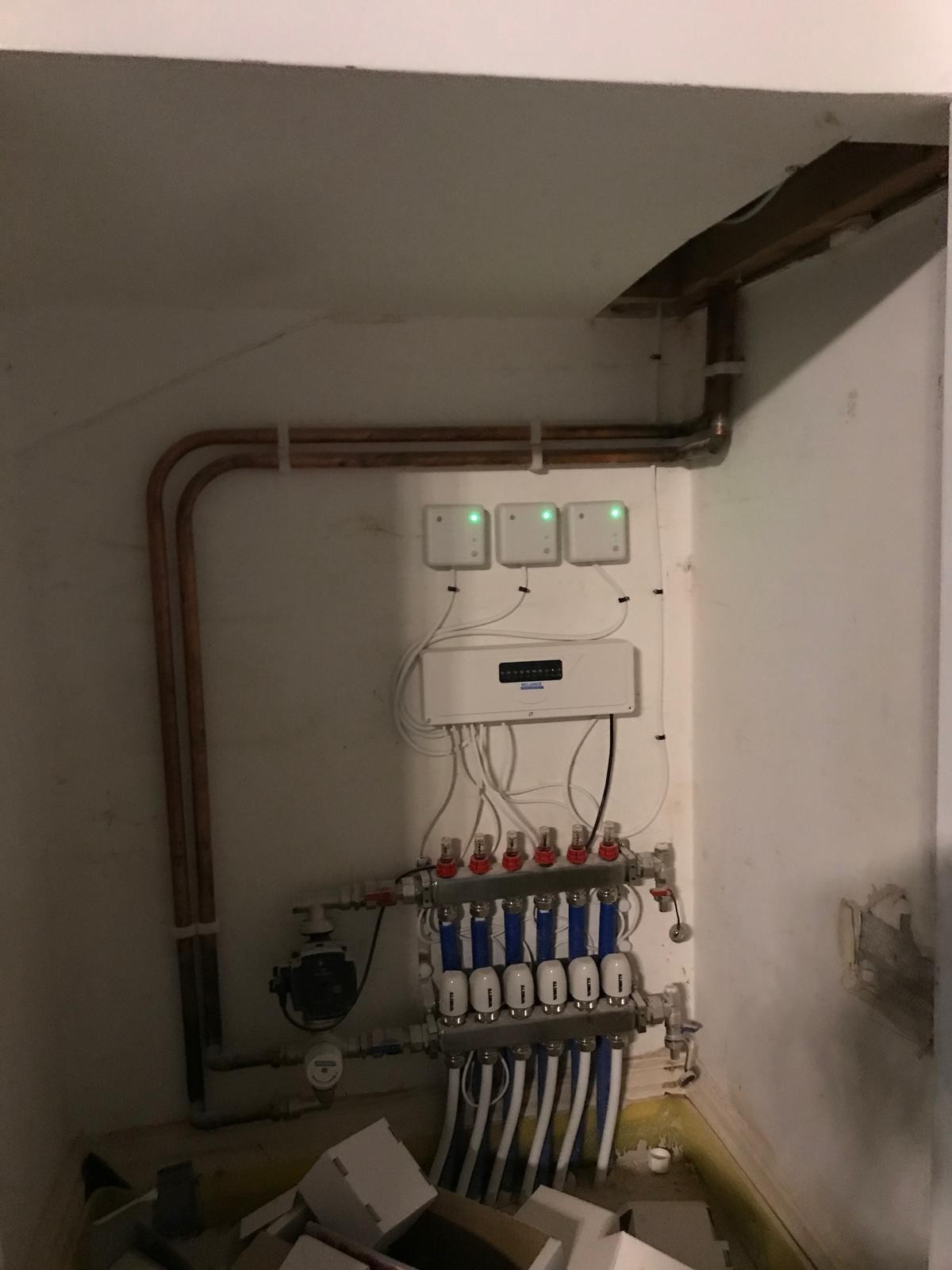
For underfloor heating, individual loops are isolated at the manifold and pressure tested one at a time, so a leak can be attributed to a single circuit before anything is cut. That alone often reduces the search area by ninety per cent.
Common causes in Manchester properties
Compression joints buried under floors that have relaxed over decades, corroded steel pipework in older systems, and radiator valve spindles weeping slowly are the three most common heating leaks we find. On supply pipework, it is failed push-fit joints installed without full insertion, and copper pinholes where pipe has been in contact with damp screed or aggressive materials.
Cylinder and boiler-side leaks are frequently not pipe at all — a passing pressure relief valve discharging outside looks exactly like a leak because pressure keeps falling, and a failed expansion vessel causes exactly that. Checking the discharge before opening a floor has saved more than one customer an unnecessary excavation.
Nail and screw penetrations from flooring or carpet gripper work are a recurring cause, particularly where a leak begins shortly after building or decorating work.
Repair methods
Where a joint has failed, it is remade properly in the correct material rather than clamped. Where pipe has corroded or been penetrated, the affected section is cut out and replaced, and the surrounding run inspected while access exists — if one buried compression joint has failed, its neighbours deserve a look.
On underfloor loops, a repair is made with an approved coupling in an accessible position or, where the damage is close to the manifold, the loop can sometimes be re-terminated. Whole-loop replacement is a last resort, not a first suggestion.
After any heating repair the system is refilled, vented and dosed with inhibitor, then held at pressure and re-checked. A repair is not finished until pressure has been shown to hold.
Insurance, trace and access
Many home insurance policies include cover for trace and access — the cost of finding and getting to a leak, and making good afterwards. Insurers generally want evidence of what was found and where. We provide a clear account of the investigation and the repair so you have something to submit.
It is worth checking your policy before assuming the cost is entirely yours, particularly where a leak has caused damage to floors or ceilings.
Landlords, agents and tenanted properties
In rentals, a leak reported by a tenant needs acting on quickly — both because damage escalates and because the obligation sits with the landlord. We arrange access directly with tenants and report findings back to the landlord or agent.
Leaks in flats carry the extra complication of affecting a neighbour below. Tracing accurately matters even more there, since the source is often in a different property entirely.
What to do while you wait
If water is actively running, close the stopcock. If it is a heating leak, turn the heating off and, where it is safe to do so, isolate the affected radiator with its valves. Put something under the leak, move what can be moved, and ring 07398 230231 — leaks are treated as emergencies and the phone is answered anytime.
Do not add leak-sealer additive to a heating system before it has been looked at. It can mask a leak temporarily, and it complicates later repairs and can block components in the boiler.
Leak Detection & Repair across Greater Manchester
Working out of 47 Urmston Lane, Stretford, Manchester, M32 9BG, we cover Urmston, Old Trafford, Altrincham, Hale & Hale Barns, Manchester City Centre, Stockport, Cheadle & Cheadle Hulme, Wilmslow, Eccles, Prestwich and the rest of Trafford, Salford, Stockport and Manchester. If your postcode isn't listed, ring 07398 230231 and ask — it usually is.
Common questions
Leak Detection & Repair questions,
answered straight
How do you find a leak without lifting the floor?+
By isolating and pressure testing sections, mapping moisture, using thermal differences on hot water and heating leaks, and acoustic listening on mains leaks. The floor is only opened once the location has been narrowed down.
My boiler keeps losing pressure — is that always a leak?+
Not always. A failed expansion vessel or a passing pressure relief valve produces the same symptom. Both are checked before any invasive investigation.
Do you repair the leak as well as find it?+
Yes. Tracing and repair are handled by the same team, and the system is refilled, dosed with inhibitor and pressure-tested before we leave.
Can you find a leak in underfloor heating?+
Yes. Loops are isolated at the manifold and pressure tested individually, which identifies the affected circuit before anything is cut.
Will my insurance cover the cost?+
Many policies include trace and access cover. We provide a clear account of what was found and where, which is normally what insurers ask for.
How quickly can you attend a leak?+
Leaks are treated as emergencies. Standard hours are 8am to 6pm Monday to Friday and the phone is answered anytime on 07398 230231.
Should I use a leak-sealer additive?+
No, not before the system has been looked at. It can mask the problem temporarily, complicate the eventual repair and block components inside the boiler.
The damp patch is on the ceiling — is the leak directly above it?+
Often not. Water travels along joists and membranes, so the failure can be metres away. That is exactly why tracing before cutting saves money.
Is the repair guaranteed?+
All workmanship carries a 12-month guarantee, and we hold £2 million public and employers' liability insurance.
Which areas do you cover?+
Stretford, Sale, Old Trafford, Urmston, Flixton, Davyhulme, Manchester city centre, Altrincham, Hale, Stockport, Cheadle, Bramhall, Wilmslow, the Heatons, Eccles, Worsley, Swinton, Prestwich and Whitefield.
Related work
Often booked alongside this
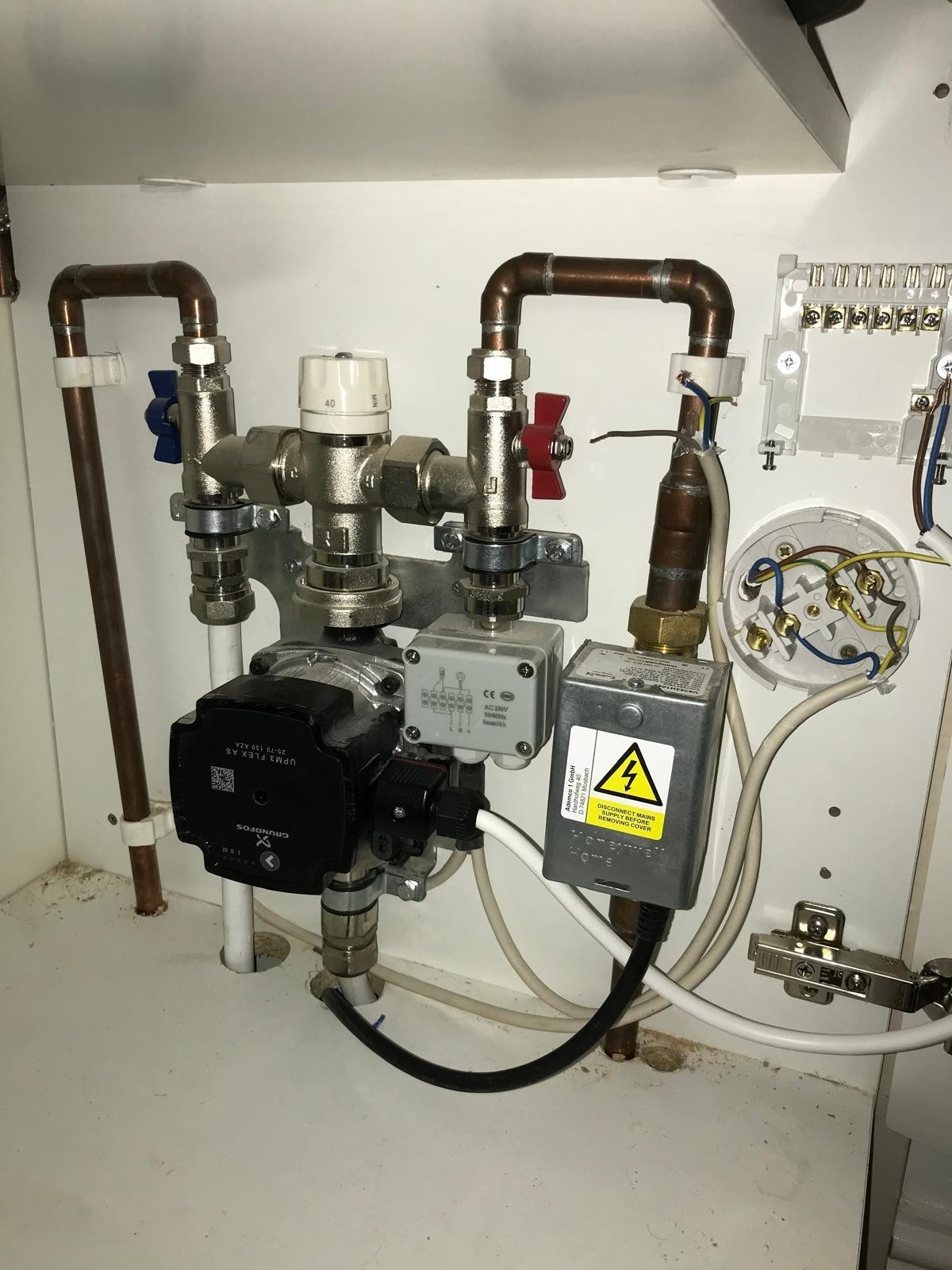
Emergency Call-Outs
No heat, no hot water or a leak? The phone is answered anytime.
Emergency Call-Outs in Manchester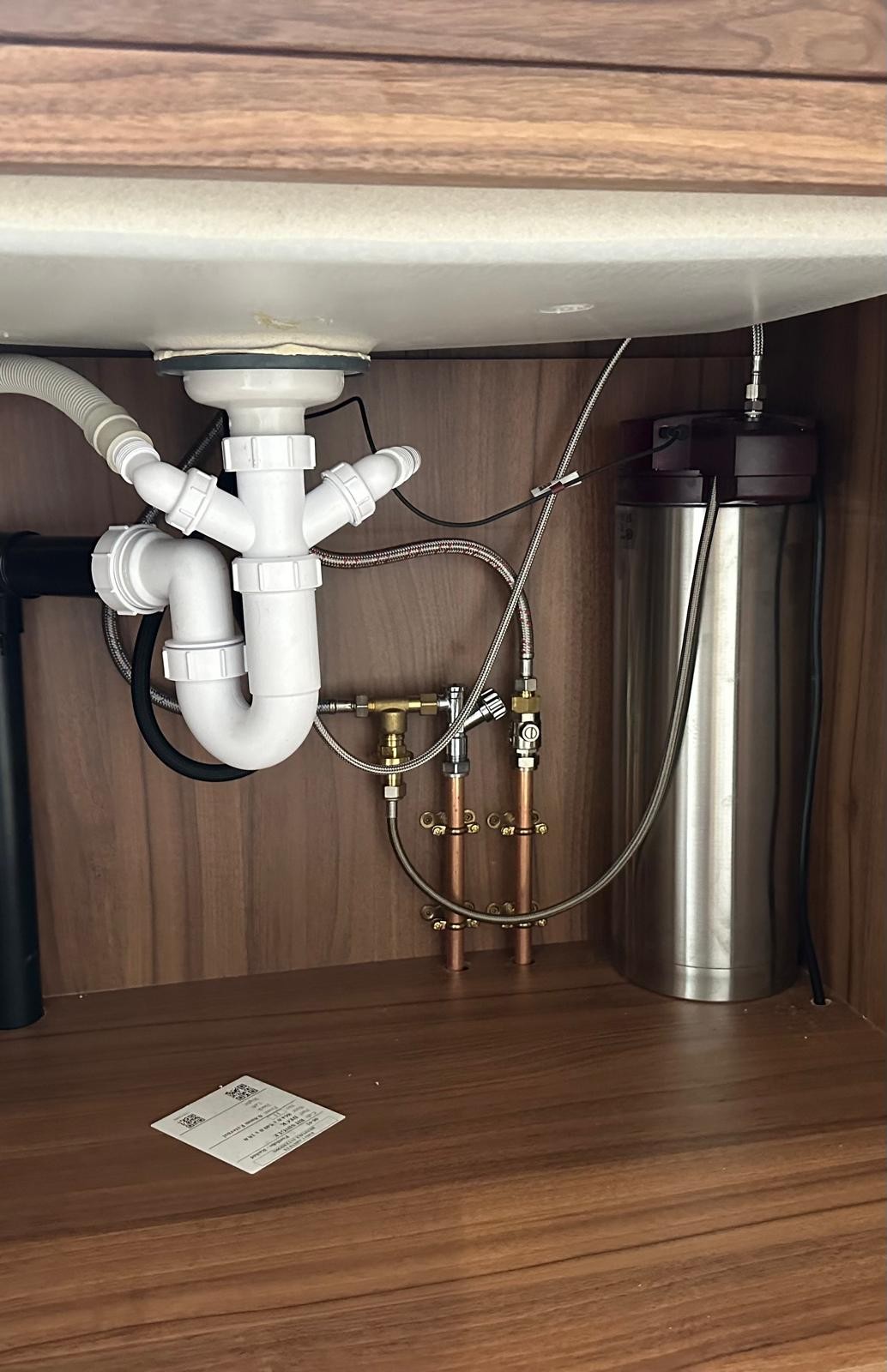
General Plumbing
Everyday plumbing work done tidily and on time.
General Plumbing in Manchester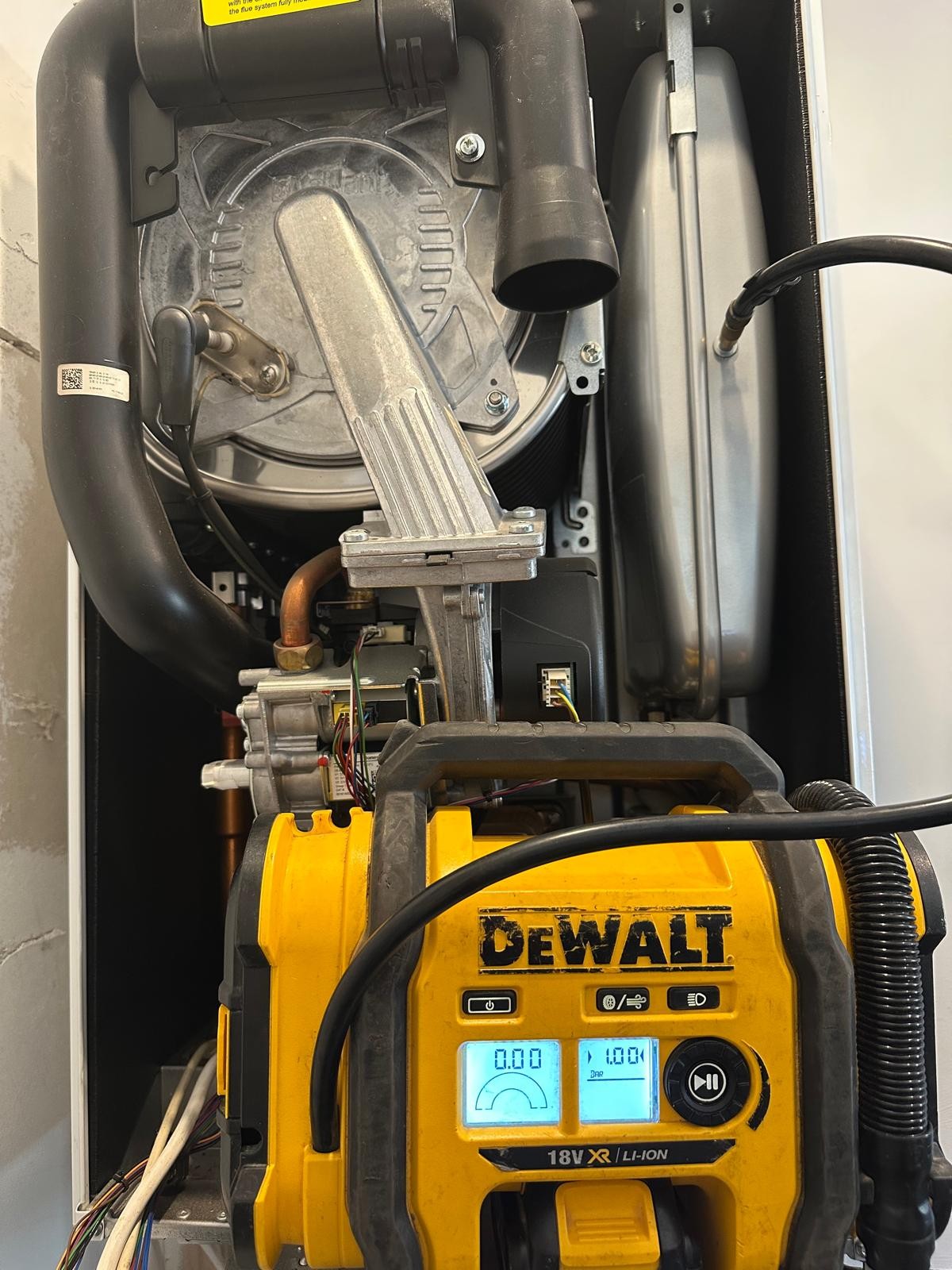
Boiler Repair
Faults diagnosed properly the first time, not guessed at.
Boiler Repair in Manchester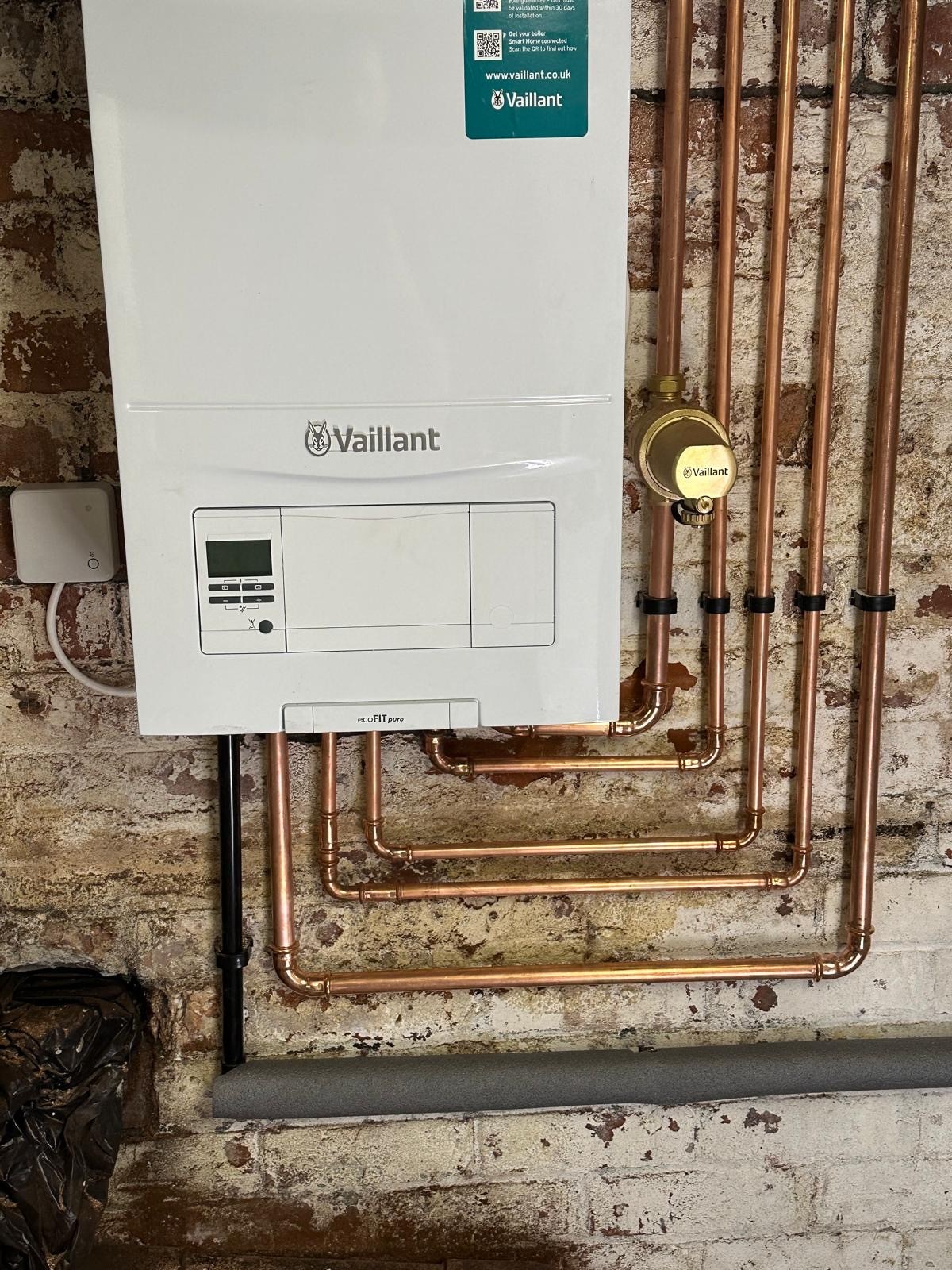
Get the leak foundbefore it costs a floor
Tell us what you are seeing and how long it has been happening. We will trace it properly, repair it, and make sure the pressure holds before we leave.
- Checkatrade verified member
- £2m insured
- 12-month workmanship guarantee