
Central HeatingInstallation In Manchester,Balanced Room By Room
A full heating system designed around your property rather than copied from the last one — correctly sized radiators, clean pipework, working controls, and every room reaching temperature instead of the back bedroom staying cold.
30+ years' combined experience · Checkatrade verified · 12-month workmanship guarantee
Free written quote back within 24 hours — no call-out charge to price the job.
Checkatrade verified
Independently reviewed member
£2m insured
Public & employers' liability
24-hour quotes
Free and in writing
12-month guarantee
On all workmanship
3-man team
The people who quote it do it
The service
A whole heating system,designed for your house
Central heating installation is the full system: boiler, pipework, radiators, valves, controls and the commissioning that makes them work together. It is a different job from swapping a boiler. Where a boiler replacement inherits whatever pipework is already in the walls, a full installation is a chance to correct undersized pipe runs, badly placed radiators, dead legs and missing zoning that have been quietly limiting the house for decades.
We install complete systems in properties that have never had heating, in renovations and extensions where the layout has changed, and in older houses where the existing system is corroded, sludged and beyond sensible repair. We also extend and re-pipe existing systems where a full replacement is not warranted — a new radiator circuit for a loft conversion, or re-piping a downstairs in a rear extension.
Radiators are sized against each room rather than the space on the wall, pipework is run to carry the flow those radiators need, and the finished system is flushed, dosed with inhibitor and balanced so heat arrives where it is supposed to. Free written quotes come back within 24 hours of the survey.
Who it's for
- Owners of properties with no central heating or with storage heaters
- Renovation and extension projects where the layout has changed
- Households with corroded, leaking or heavily sludged old systems
- Anyone with rooms that never reach temperature no matter how long the heating runs
- Landlords upgrading a rental property to a reliable, serviceable system
When you need it
- Radiators are cold at the bottom, rusting, or leaking at the valves
- The property is being rewired, replastered or extended — the cheapest time to re-pipe
- You are removing electric storage heaters or a solid fuel back boiler
- Upstairs and downstairs cannot be controlled independently
- The system loses pressure and repeated repairs have not solved it
What happens if it's left
A badly designed systemcosts you every single winter
Heating faults that feel like bad luck are usually design faults. A cold back bedroom is not a mystery — it is an undersized radiator, an unbalanced circuit or a pipe run too narrow to deliver the flow. You cannot thermostat your way out of it, so people compensate by running the whole house hotter for longer and paying for it on every bill.
Rooms you stop using
When a room never gets warm, households quietly abandon it — the box room becomes storage, the dining room goes unused in winter. You are paying to heat and maintain space that has become unusable.
Corrosion that spreads
An old system without inhibitor generates magnetite continuously. It blocks radiators, wrecks pumps and valves, and eventually finds the weakest joint. Water damage from a failed heating pipe under a floor is not a cheap thing to put right.
Money spent on the wrong fix
A new boiler bolted onto a failing system does not solve cold radiators, and people frequently spend thousands discovering that. The boiler was never the constraint.
Mistakes that cost people money
- Replacing radiators one at a time without ever balancing the system
- Adding radiators to a circuit that cannot deliver the extra flow
- Choosing radiators by the wall space available rather than the room's heat loss
- Skipping inhibitor after a flush, so corrosion restarts immediately
- Leaving the whole house on a single zone and single timer
- Re-plastering and flooring before the pipework is decided, doubling the disruption later
Our process
The same five steps
on every job
Survey & heat loss
Every room measured and assessed — construction, glazing, exposure and use — so radiator sizes and boiler output are based on the property rather than assumption.
System design & quote
Boiler type, cylinder if needed, pipe routes, radiator schedule, zoning and controls set out clearly, with a free written quote back within 24 hours.
First fix
Pipework run to each position, routes agreed with you before floors or ceilings are disturbed, and everything pressure-tested before it is covered up.
Second fix & commissioning
Radiators, valves, boiler and controls fitted, the system flushed, dosed with inhibitor and filled, then commissioned to manufacturer requirements.
Balancing & handover
Every radiator balanced so the far rooms heat with the near ones, controls demonstrated, paperwork issued, and the workmanship guaranteed for 12 months.
What you actually get
Six things that change
once the work is done
Every room reaching temperature
Radiators sized to each room's heat loss and a balanced circuit mean the back bedroom warms at the same rate as the lounge.
Independent zones
Upstairs and downstairs on separate schedules stops you heating four empty bedrooms every evening to keep the living room comfortable.
Protected against corrosion
Clean fill, correct inhibitor dosing and a magnetic filter keep magnetite out of the pump and heat exchanger from day one.
Quiet operation
Correctly sized pipework and a properly set pump remove the whistling valves, banging pipes and gurgling that plague retrofitted systems.
Serviceable for the long term
Isolation valves, sensible pipe routes and accessible components mean future maintenance is a short visit rather than a floor-up excavation.
One team through the whole job
The same small team surveys, first fixes, second fixes and commissions. Nothing is handed to a subcontractor halfway through.
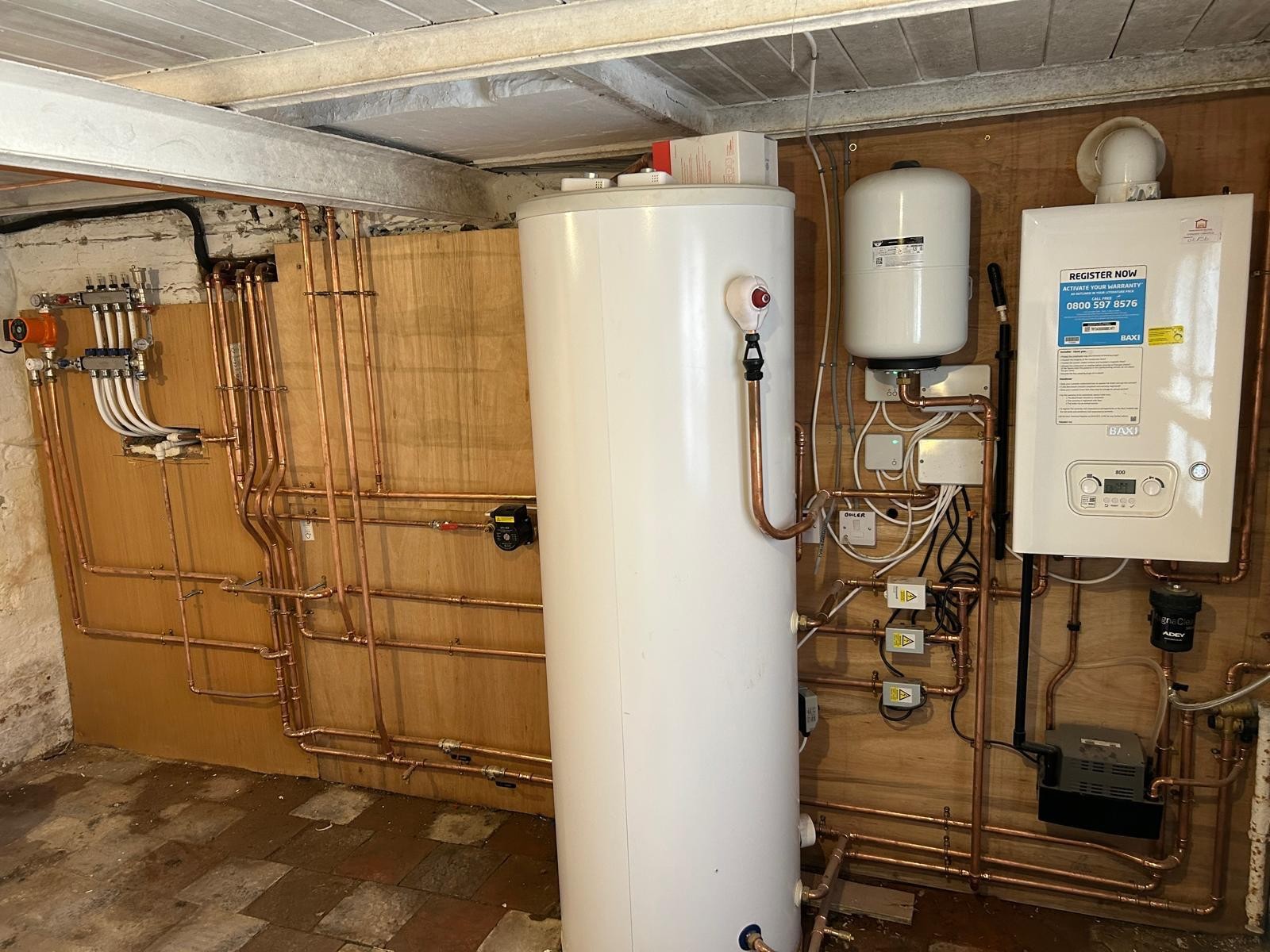
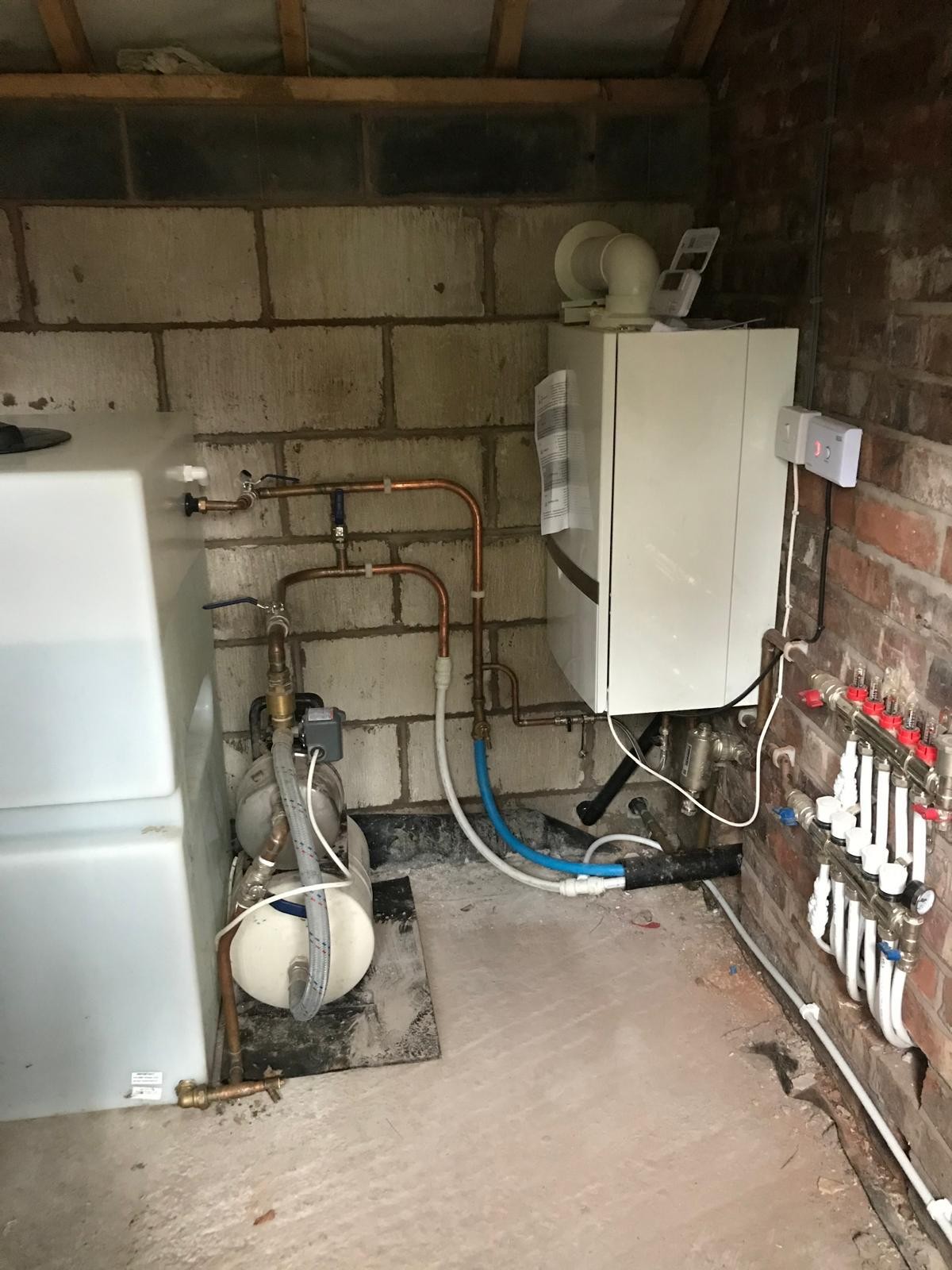
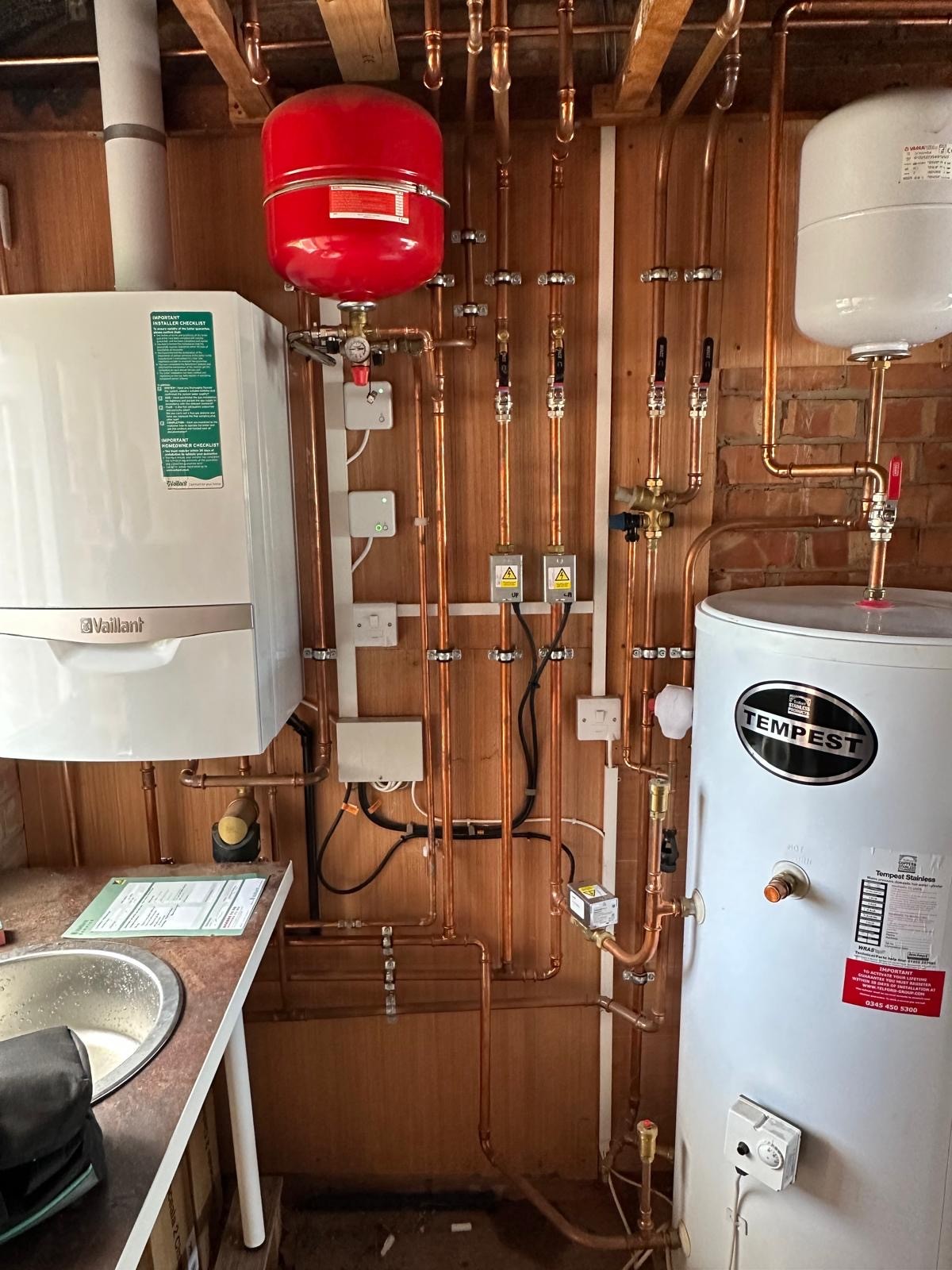
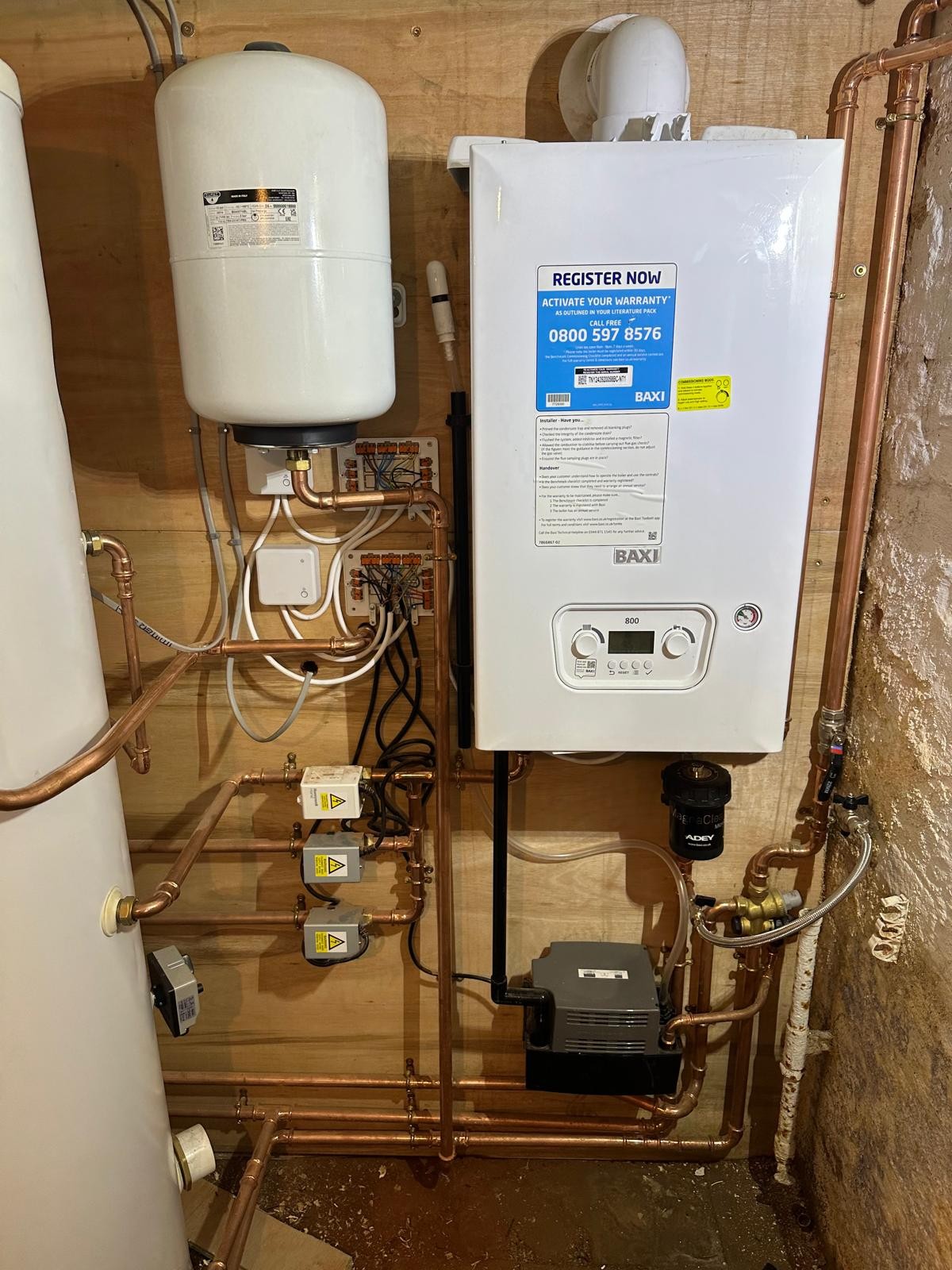
Recent central heating installation work
Photographs from jobs
completed by our own engineers
System design, materials andmethods we use on site
Manchester housing stock ranges from solid-wall Victorian terraces to 1930s semis and new-build flats, and each type imposes different constraints on a heating installation. These are the decisions that shape the finished system.
Sealed systems, open vented and zoning
Most new installations are sealed and pressurised: no loft tanks, no open vent, less oxygen ingress and therefore slower corrosion. It also means the system can operate at higher temperatures without the noise problems of a vented setup.
Open vented systems still have their place in older properties with fragile plumbing or unusual pressure conditions, and we install them where that is genuinely the better answer rather than forcing a sealed conversion the pipework cannot support.
Zoning is specified on anything larger than a small flat. Motorised zone valves on upstairs and downstairs circuits, a cylinder thermostat where there is stored hot water, and separate programming for each zone is the arrangement that saves the most gas over a winter.
Radiator selection and sizing
Radiator output is calculated from each room's heat loss — wall construction, window area, ceiling height, external exposure and how the room is used. Two rooms of identical floor area often need very different outputs, and that is why identical radiators throughout a house produce identical complaints.
We fit standard panel radiators, low surface temperature radiators where there is a safeguarding requirement, vertical radiators where wall space is limited, and period-style cast iron radiators — which is a speciality of ours and covered in detail on its own page. Thermostatic valves go on everywhere except the room holding the room thermostat, so the two are not fighting each other.
Pipework materials and routing
We use copper for exposed and jointed work, with press or soldered joints depending on the situation, and plastic barrier pipe where it is appropriate for concealed runs under floors. Pipe diameter is chosen for the flow each circuit needs — undersized 10mm feeds to a large radiator are one of the most common causes of a room that never quite warms up.
Routing is agreed with you before floors come up. In a terrace with original boards, we lift, notch correctly and refix rather than cutting a channel and leaving you to sort the floor out. In a renovation, we coordinate first fix around plastering and flooring so the pipework never becomes the thing holding the project up.
Flushing, inhibitor and water treatment
New systems are flushed to remove flux, swarf and debris before commissioning, then dosed with corrosion inhibitor. Where we are extending or re-piping an existing system, a power flush is often needed first so old magnetite is not pushed into new components.
A magnetic filter is fitted on the return as standard and is a service point thereafter. In harder water areas, scale reduction on the mains feed is worth considering, particularly where there is an unvented cylinder or a combi with a plate heat exchanger.
Controls, thermostats and smart heating
A system is only as good as what tells it when to run. We fit programmable room thermostats, cylinder thermostats, zone valves and smart controls such as Hive, and we set them up properly rather than leaving a manual on the worktop.
Where the boiler supports weather compensation or load compensation, we will use it — running the system at a lower flow temperature for longer produces a more even house and better condensing efficiency than short blasts at 80 degrees.
Renovations, extensions and part-systems
Not every job is a full replacement. Extending a system into a rear extension or loft conversion means checking the existing boiler has the capacity for the added load, and upsizing the feed if it does not. Adding radiators to a system already at its limit is how a whole house ends up lukewarm.
During a renovation the right sequence matters: first fix pipework before plastering, pressure test before floors go down, and second fix once decoration allows. We work to the programme of the wider job rather than treating the heating as an isolated visit.
Domestic and small commercial installations
Domestic work — terraces, semis, detached houses, flats and rentals across Trafford, Manchester, Salford and Stockport — makes up most of what we install. Landlord properties are handled between tenancies where possible, and can be paired with a gas safety certificate.
In small commercial premises such as offices, shops and salons running domestic-type systems, the difference is scheduling and zoning: heating that follows opening hours rather than a domestic pattern, and areas that can be controlled separately so an unused back office is not heated all day.
Central Heating Installation across Greater Manchester
Working out of 47 Urmston Lane, Stretford, Manchester, M32 9BG, we cover Urmston, Old Trafford, Altrincham, Hale & Hale Barns, Manchester City Centre, Stockport, Cheadle & Cheadle Hulme, Wilmslow, Eccles, Prestwich and the rest of Trafford, Salford, Stockport and Manchester. If your postcode isn't listed, ring 07398 230231 and ask — it usually is.
Common questions
Central Heating Installation questions,
answered straight
How long does a full central heating installation take?+
A typical house is three to five days depending on size, radiator count, whether floors have to come up and whether a cylinder is involved. You get a realistic timeline before we start, not an optimistic one.
Do I need a new boiler as part of a new heating system?+
Not always. If the existing boiler is recent, correctly sized and in good order it can be retained. If it is old, undersized for the new load or unreliable, replacing it as part of the work avoids paying for access twice.
Can you install heating in a house that has never had it?+
Yes. Properties with electric storage heaters, solid fuel or no heating at all are regular work. It involves a gas supply check, full system design and pipework throughout, and is quoted after a proper survey.
Will you need to lift my floors?+
Usually some of them. Routes are agreed with you first, boards are lifted and refixed properly rather than hacked, and we work around the finishes you care about wherever the pipework allows.
What is balancing and why does it matter?+
Balancing sets the flow through each radiator so near ones do not steal all the heat from far ones. Without it, the room furthest from the boiler stays cold while the hallway roasts. It is done on every installation we finish.
Can you add radiators to my existing system?+
Yes, provided the boiler and pipework can carry the extra load. That is checked first — adding radiators to a system already at capacity makes the whole house cooler rather than the new room warmer.
How much does central heating installation cost?+
It depends on the size of the property, the radiator schedule, the boiler and cylinder specified and how much pipework is involved. Every quote is free, written and back within 24 hours of the survey.
Do you fit smart controls?+
Yes — programmable thermostats, zone valves, cylinder thermostats and smart controls such as Hive, set up and demonstrated before we leave.
Is the work guaranteed?+
All workmanship carries a 12-month guarantee, and boilers carry their manufacturer warranty of up to 12 years depending on model.
Which areas do you cover?+
Stretford, Sale, Old Trafford, Urmston, Flixton, Davyhulme and the rest of Trafford, plus Manchester city centre, Altrincham, Hale, Stockport, Cheadle, Bramhall, Wilmslow, the Heatons, Eccles, Worsley, Swinton, Prestwich and Whitefield.
Related work
Often booked alongside this
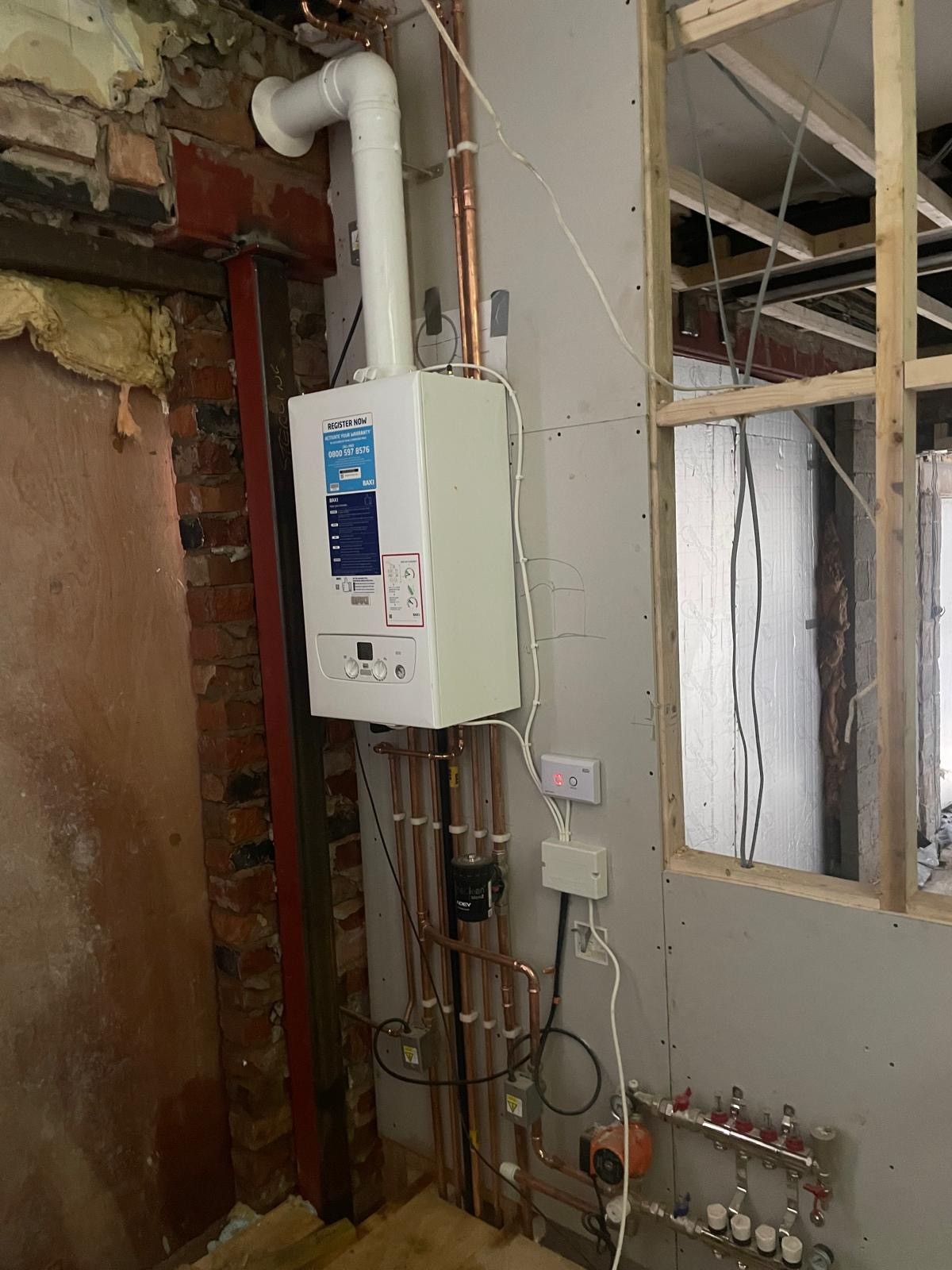
Boiler Installation
New boilers fitted from £1,800, with warranties up to 12 years.
Boiler Installation in Manchester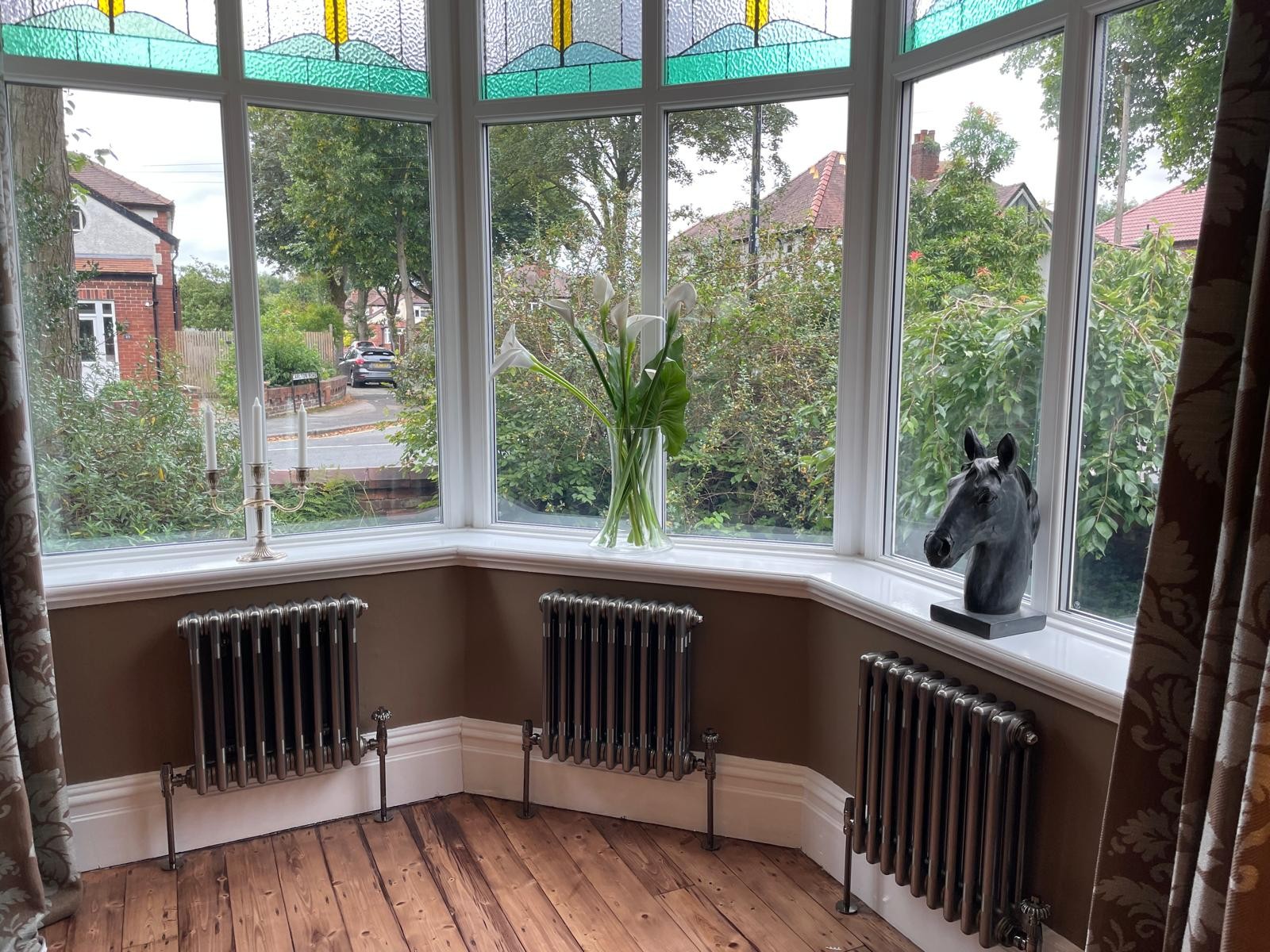
Cast Iron Radiator Installation
Our speciality — period radiators fitted and balanced.
Cast Iron Radiator Installation in Manchester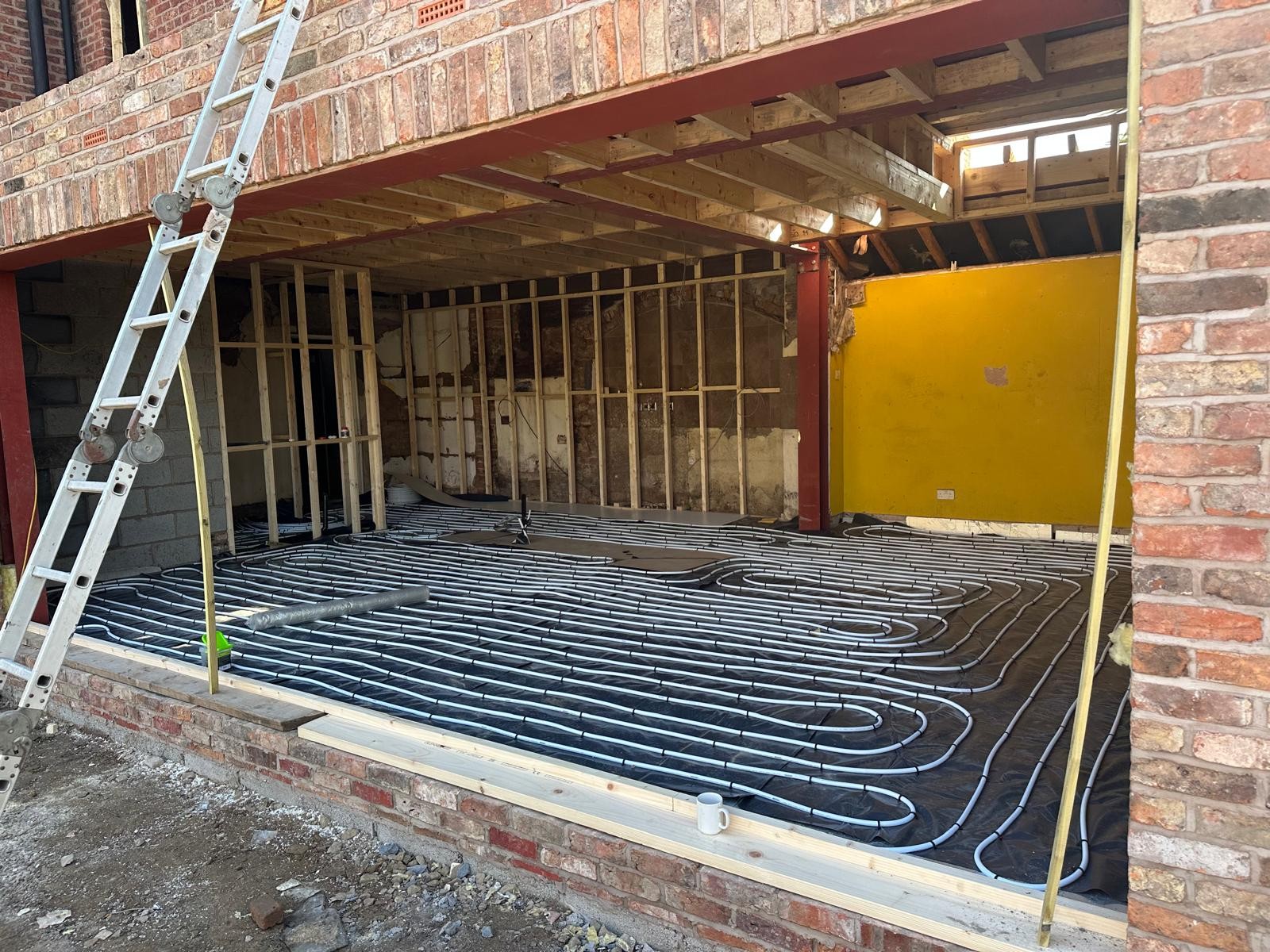
Underfloor Heating
Installation and repair of wet underfloor systems.
Underfloor Heating in Manchester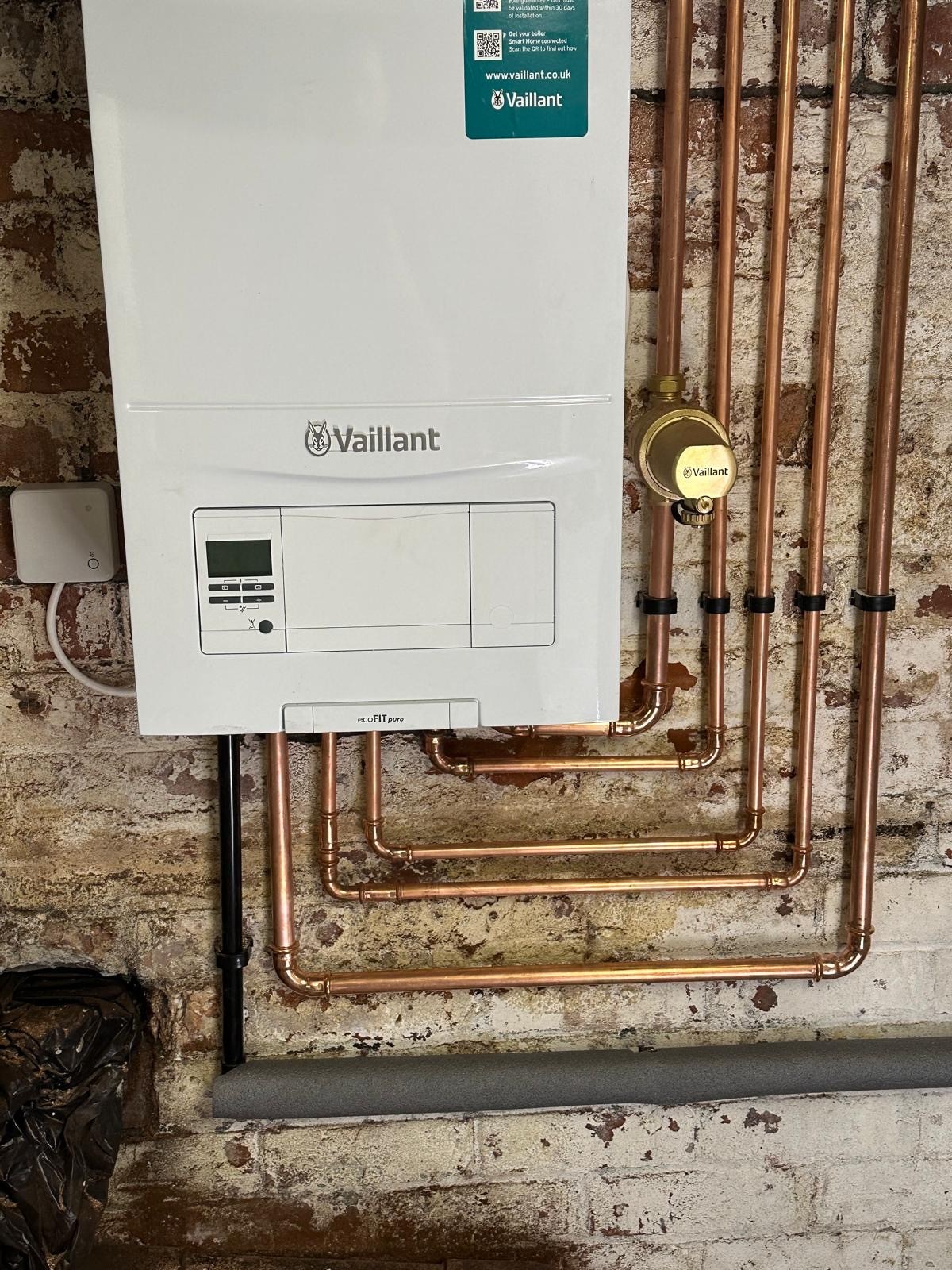
Get a heating systemthat heats every room
Book a survey and we will measure the property, size the radiators against each room and send a free written quote within 24 hours. Same team from survey to handover.
- Checkatrade verified member
- £2m insured
- 12-month workmanship guarantee