
Hot Water CylindersInstalled & ServicedAcross Manchester
Mains-pressure hot water at every tap, sized for the number of people actually living in the house — installed, serviced and repaired by the same three-man team, with a 12-month workmanship guarantee.
30+ years' combined experience · Checkatrade verified · Free written quote within 24 hours
Free written quote back within 24 hours — no call-out charge to price the job.
Checkatrade verified
Independently reviewed member
£2m insured
Public & employers' liability
24-hour quotes
Free and in writing
12-month guarantee
On all workmanship
Annual servicing
Keeps cylinder warranties valid
The service
Stored hot water,sized for the household
A hot water cylinder stores heated water so several outlets can run at once without the flow collapsing. In houses with more than one bathroom, or where the family routine means two showers and a kitchen tap at the same time, a cylinder does something a combi boiler physically cannot — deliver full flow to multiple outlets simultaneously.
We install unvented (mains-pressure) cylinders, vented cylinders fed from a loft tank, and thermal stores, and we service and repair all of them. Unvented cylinders are the usual choice on modern installations: strong pressure at every tap, no loft tanks, and consistent showering without a pump. They are also pressurised vessels, which means they need correct installation and annual servicing rather than being fitted and forgotten.
Sizing is the decision that determines whether you are happy with the system. Too small and you run out mid-evening; too large and you pay to keep water hot that nobody uses. We size against occupancy, bathroom count and how the household actually showers, then specify recovery time and coil size to match the boiler.
Who it's for
- Houses with two or more bathrooms or an en-suite
- Families where showers overlap in the morning
- Anyone replacing an old, corroded or poorly insulated copper cylinder
- Households moving from a loft-tank system to mains-pressure hot water
- Owners of properties where a combi cannot deliver the required flow
When you need it
- Hot water runs out before everyone has showered
- Weak pressure upstairs, or a shower that needs a pump to be usable
- The existing cylinder is leaking, scaled up or barely insulated
- The pressure relief valve is discharging or the tundish is dripping
- You are adding a bathroom, an en-suite or converting a loft
What happens if it's left
A neglected cylinderfails wet, and fails big
Cylinders rarely give much notice. An unvented cylinder is a pressurised vessel with an expansion vessel, a pressure reducing valve and safety devices that all have a service life. When those are ignored, the first symptom is often water — through a ceiling, into a cupboard, or out of a tundish that has been dripping quietly for months.
Water damage through the house
A cylinder holds well over a hundred litres. A failed vessel or a corroded connection in an airing cupboard on the first floor takes ceilings, flooring and decoration with it.
Safety devices that stop being safe
Unvented cylinders rely on expansion vessels, pressure reducing valves and temperature and pressure relief valves. These are not decorative. Unserviced, they seize, and the protection they provide quietly disappears.
Warranty lost, cost inherited
Manufacturer warranties on unvented cylinders require annual servicing. Miss it and a failure that would have been covered becomes a replacement you pay for in full.
Mistakes that cost people money
- Ignoring a dripping tundish — it is a warning, not a quirk
- Never servicing an unvented cylinder and losing the manufacturer warranty
- Sizing a cylinder by what fits the cupboard instead of the household's demand
- Fitting a small coil so recovery takes hours after the first two showers
- Leaving an old, uninsulated copper cylinder in place and paying to reheat it constantly
- Converting to a combi in a two-bathroom house and losing simultaneous flow
Our process
The same five steps
on every job
Demand survey
Occupancy, bathroom count, shower types and mains flow and pressure measured — the numbers that decide cylinder size and whether unvented is viable.
Specification & quote
Cylinder type, capacity, coil size and recovery rate specified against the boiler, with a free written quote back within 24 hours.
Installation
Old cylinder removed, new unit fitted with the correct valve set, expansion vessel, discharge pipework and tundish, and secondary circulation where the layout needs it.
Commissioning
Pressures set, safety devices tested, cylinder thermostat and controls wired and configured, and the system run up and checked under real demand.
Handover & service plan
Warranty registered, operation explained, and the annual service diarised so the cover stays valid. Workmanship guaranteed for 12 months.
What you actually get
Six things that change
once the work is done
Two showers at once
Stored hot water at mains pressure means simultaneous outlets without the flow dropping away, which no combi can match.
Strong pressure upstairs
An unvented cylinder runs at mains pressure, so the top-floor shower performs like the downstairs tap without needing a pump.
Loft space back
No cold water storage tank and no feed and expansion tank means fewer things to freeze, leak or contaminate above your ceilings.
Faster reheat
Coil size matched to the boiler output means the cylinder recovers in a sensible time rather than leaving the last person cold.
Lower standing loss
Modern factory-insulated cylinders hold heat far better than the old copper ones they replace, so less of the gas you burn leaks into the cupboard.
Safe, serviced and covered
Correct discharge pipework, tested safety devices and an annual service that keeps the manufacturer warranty enforceable.
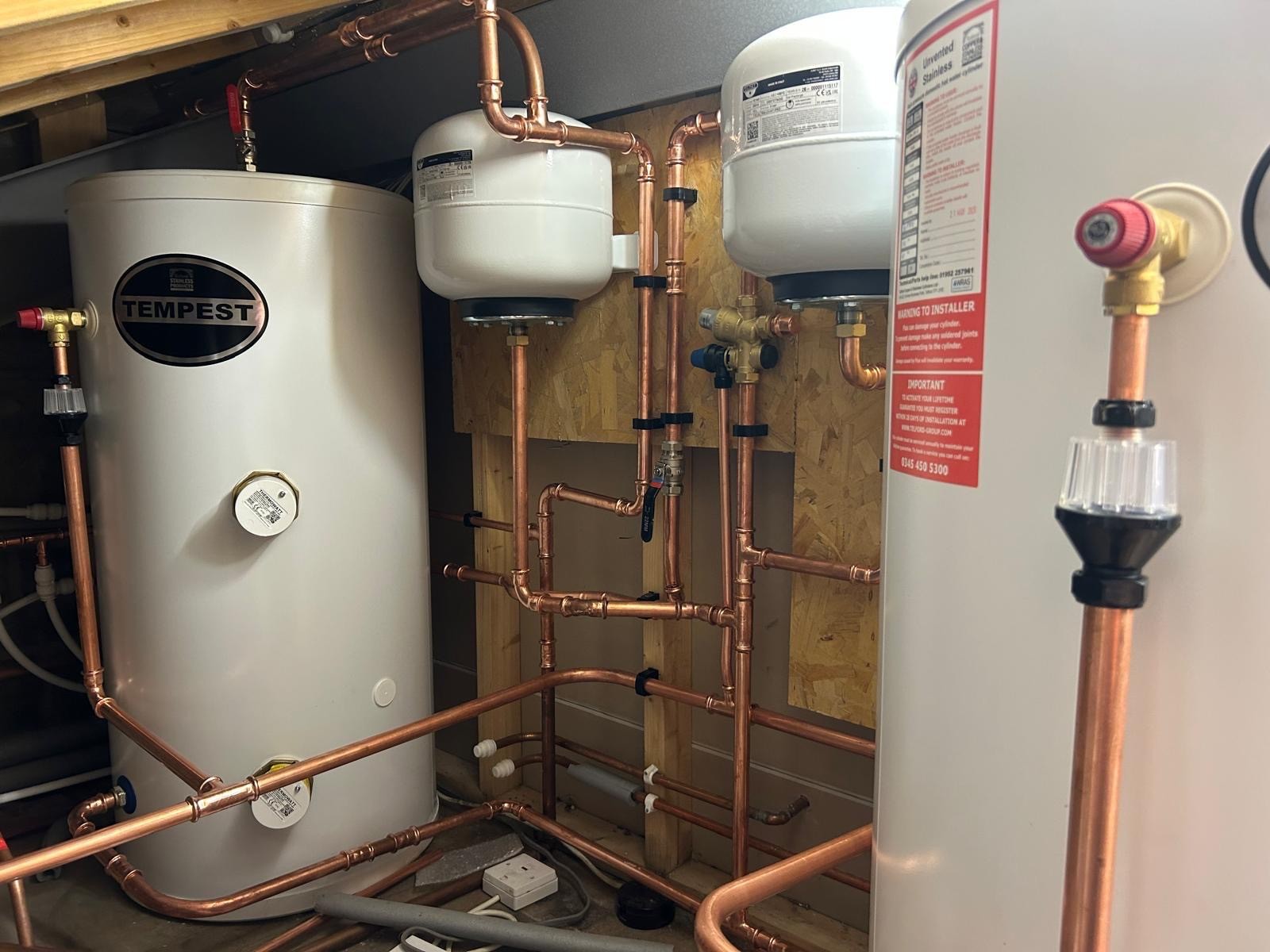
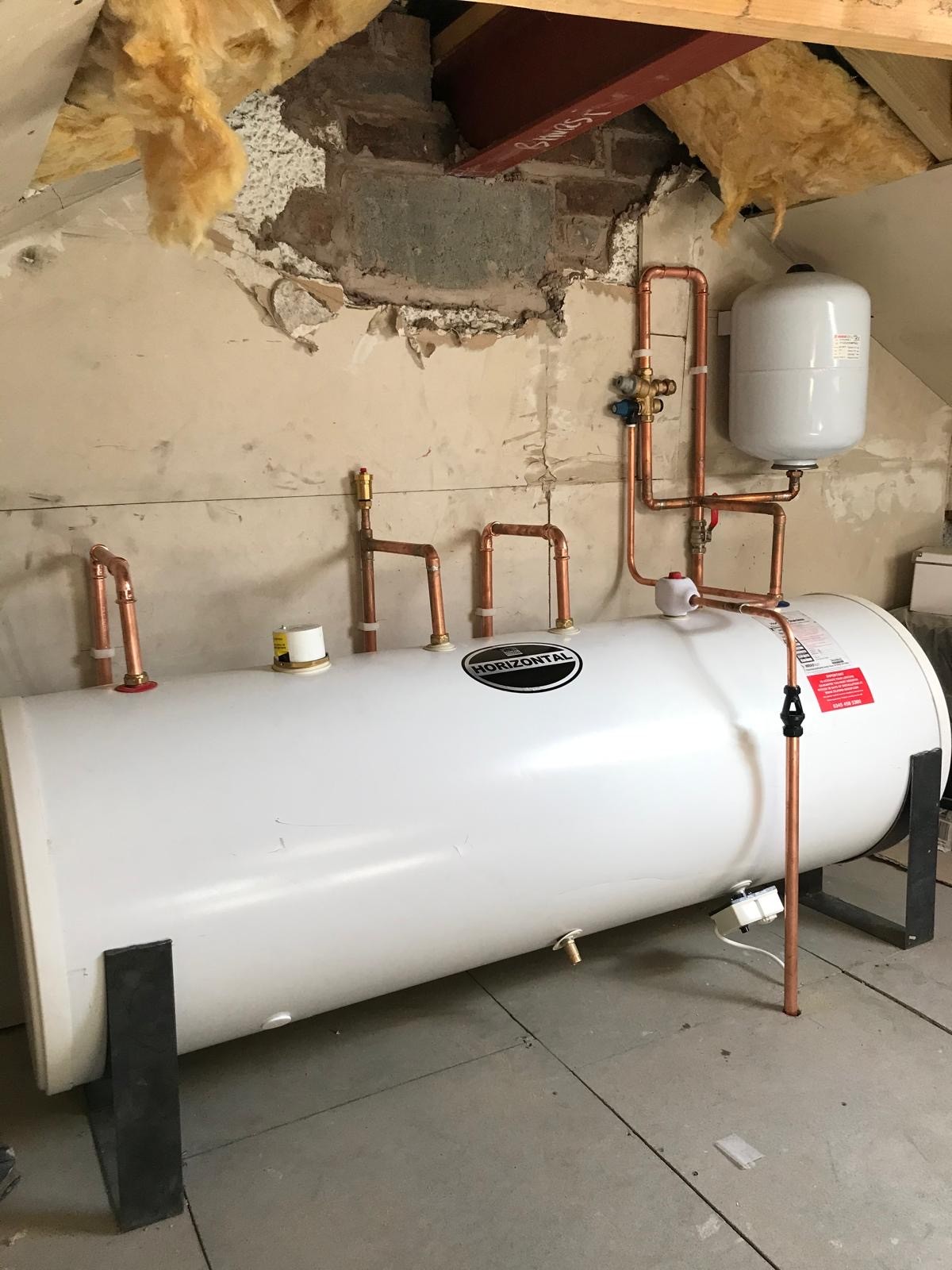
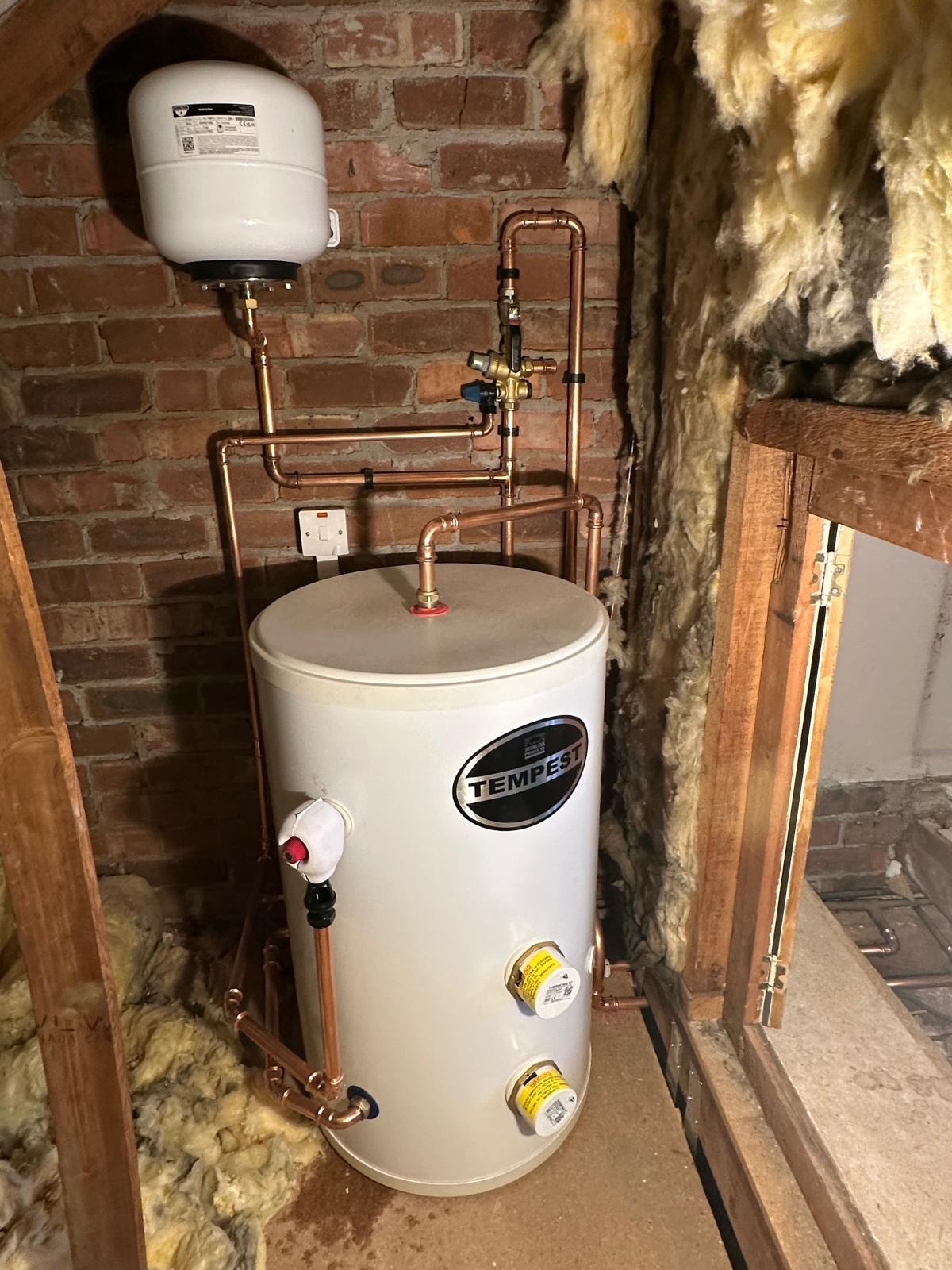
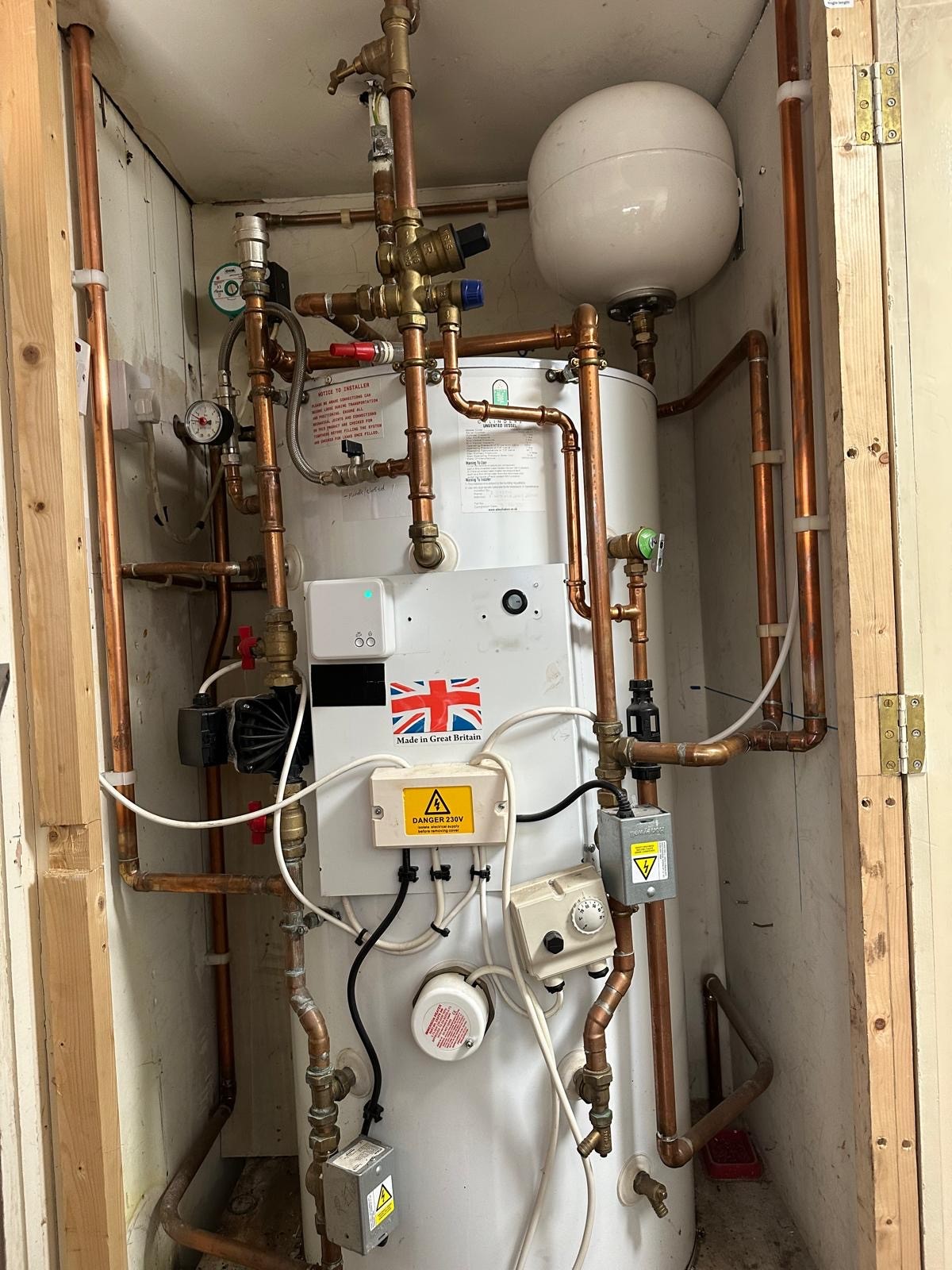
Recent hot water cylinders work
Photographs from jobs
completed by our own engineers
Cylinder types, sizing andservicing in detail
Hot water is where most complaints about a heating system actually originate. Getting the cylinder right is a mix of the correct type for the property, honest sizing, and maintenance that most households have never been told about.
Unvented cylinders
An unvented cylinder is fed directly from the cold main and delivers hot water at mains pressure. It needs an adequate incoming main to work well — there is no point specifying one if the street supply cannot deliver the flow, which is why we measure before recommending rather than after installing.
The installation includes a pressure reducing valve, an expansion vessel or internal air gap, an expansion relief valve, a temperature and pressure relief valve, and a correctly sized and routed discharge pipe through a tundish to a safe termination. That discharge arrangement is not optional detail — it is the part that makes a pressurised vessel safe, and it is the part most often found wrong on cylinders we are called out to.
Duplex stainless steel is the common material now, chosen for corrosion resistance and thinner walls allowing more capacity in the same footprint. Factory-applied insulation keeps standing losses low.
Vented cylinders and thermal stores
A vented cylinder is fed by gravity from a cold tank in the loft. Pressure is limited by the height of that tank, which is why upstairs showers on these systems are often weak and need pumping. They remain a valid choice where mains flow is poor, where the property's pipework will not tolerate mains pressure, or where the customer wants the simplest possible replacement.
Thermal stores work the other way round: the stored water is the heating water, and mains cold passes through a heat exchanger to be heated on demand. They suit particular situations, especially where multiple heat sources feed one store.
Sizing, recovery and coil selection
Capacity is driven by occupancy and simultaneous demand. As a rule, more bathrooms and more people mean more litres, but the more useful question is what happens on the worst morning of the week — how many showers back to back, and how long between them.
Recovery matters as much as capacity. A large cylinder with an undersized coil reheats slowly and behaves like a small one. We match coil surface area and boiler output so the cylinder is usable again quickly, and specify a high-recovery model where demand is heavy.
Where a house has a long run to an en-suite, secondary circulation with a pump and timer removes the wait for hot water at the tap and the litres wasted every time someone runs it off.
Controls, temperature and scale
A cylinder thermostat and motorised valve give hot water its own zone and schedule, separate from the heating. Storage temperature is set high enough for safety against bacterial growth, with blending at the outlet where scald risk is a concern.
In harder water areas scale is the main enemy of coils and immersion heaters. Where water hardness warrants it, scale reduction on the incoming main extends the life of the cylinder and everything else fed by it.
Servicing and common repairs
An annual cylinder service checks and re-charges the expansion vessel, tests the expansion relief and temperature and pressure relief valves, checks the pressure reducing valve, inspects the discharge pipework and tundish, checks the immersion heater and thermostat, and confirms stored temperature and controls.
The repairs we are called to most often are a dripping tundish caused by a failed expansion vessel or a passing relief valve, a scaled or failed immersion heater, a seized motorised valve stopping the cylinder heating at all, and inadequate discharge pipework installed by someone who treated a pressurised vessel like a copper tank.
Replacing an old copper cylinder
Swapping a tired vented copper cylinder for a modern unvented unit is one of the most noticeable upgrades a house can have — mains pressure at every tap, loft tanks gone, and far less heat leaking into the cupboard. It does require an adequate mains supply and correctly routed discharge, so it is quoted after a survey, not over the phone.
Where an unvented conversion is not viable, a modern high-insulation vented cylinder with a properly specified pump is still a substantial improvement over a 1980s copper cylinder wrapped in a jacket.
Domestic and small commercial applications
Most cylinder work is domestic: family homes across Sale, Altrincham, Urmston, Stretford and the Heatons where a combi cannot keep up with the household. Landlord properties benefit too, since a correctly sized cylinder generates far fewer hot water complaints during a tenancy.
Small commercial premises with washroom or kitchen demand — salons, cafés, offices — often need stored hot water for the same reason: several outlets running at once. Sizing there follows peak trading demand rather than a domestic morning routine.
Hot Water Cylinders across Greater Manchester
Working out of 47 Urmston Lane, Stretford, Manchester, M32 9BG, we cover Urmston, Old Trafford, Altrincham, Hale & Hale Barns, Manchester City Centre, Stockport, Cheadle & Cheadle Hulme, Wilmslow, Eccles, Prestwich and the rest of Trafford, Salford, Stockport and Manchester. If your postcode isn't listed, ring 07398 230231 and ask — it usually is.
Common questions
Hot Water Cylinders questions,
answered straight
What size hot water cylinder do I need?+
It depends on occupancy, the number of bathrooms and how much demand overlaps. We size against the household's worst morning rather than a rule of thumb, and match coil size so the cylinder recovers quickly.
What is an unvented cylinder?+
A cylinder fed directly from the cold main, so hot water is delivered at mains pressure with no loft tanks. It needs an adequate incoming supply and correctly installed safety and discharge arrangements.
Does an unvented cylinder need servicing?+
Yes, annually. The expansion vessel, relief valves, pressure reducing valve and discharge arrangement all need checking, and manufacturers require the service to keep the warranty valid.
Why is my tundish dripping?+
Usually a failed expansion vessel or a passing relief valve. It is a warning that the pressure controls are not doing their job and should be looked at rather than ignored.
Can I replace my old copper cylinder with an unvented one?+
In most cases yes, provided the incoming mains flow and pressure are adequate and the discharge pipework can be routed to a safe termination. Both are checked on the survey.
Cylinder or combi — which is better?+
For a one-bathroom flat or small terrace, a combi is usually simpler. For two or more bathrooms with overlapping demand, a system boiler and cylinder gives full flow at several outlets at once, which a combi cannot.
How long does installation take?+
A straight cylinder replacement is often a single day. A conversion from vented to unvented, or a new cylinder with secondary circulation, typically takes longer and is confirmed before we start.
Can you repair my existing cylinder?+
Yes. Expansion vessels, relief valves, immersion heaters, thermostats and motorised valves are all repairable, and replacing the failed component is usually far cheaper than a new cylinder.
Is your work guaranteed?+
All workmanship carries a 12-month guarantee, we are a verified Checkatrade member, and we hold £2 million public and employers' liability insurance.
Which areas do you cover?+
Stretford, Sale, Old Trafford, Urmston, Flixton, Davyhulme, Manchester city centre, Altrincham, Hale, Stockport, Cheadle, Bramhall, Wilmslow, the Heatons, Eccles, Worsley, Swinton, Prestwich and Whitefield.
Related work
Often booked alongside this
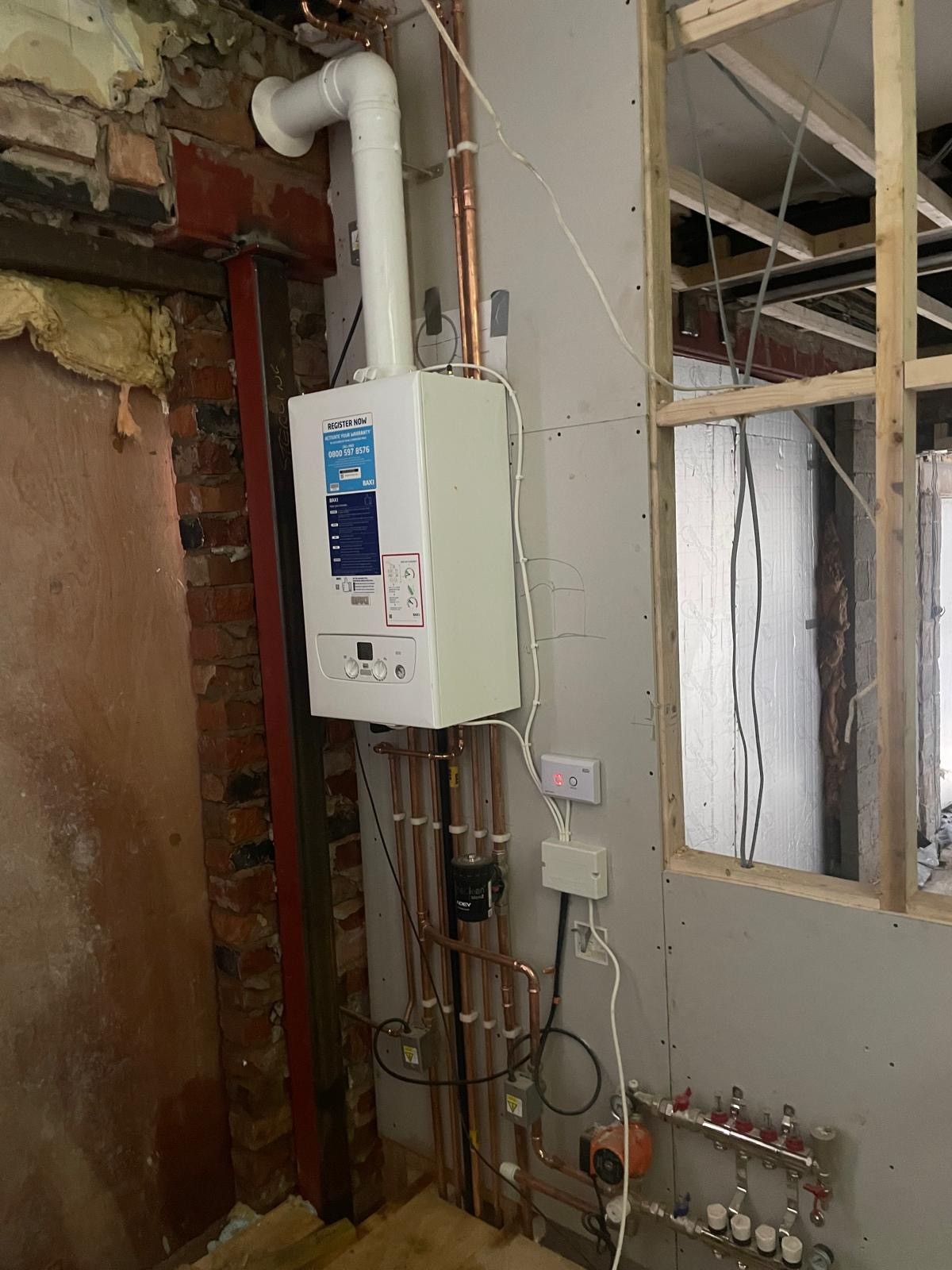
Boiler Installation
New boilers fitted from £1,800, with warranties up to 12 years.
Boiler Installation in Manchester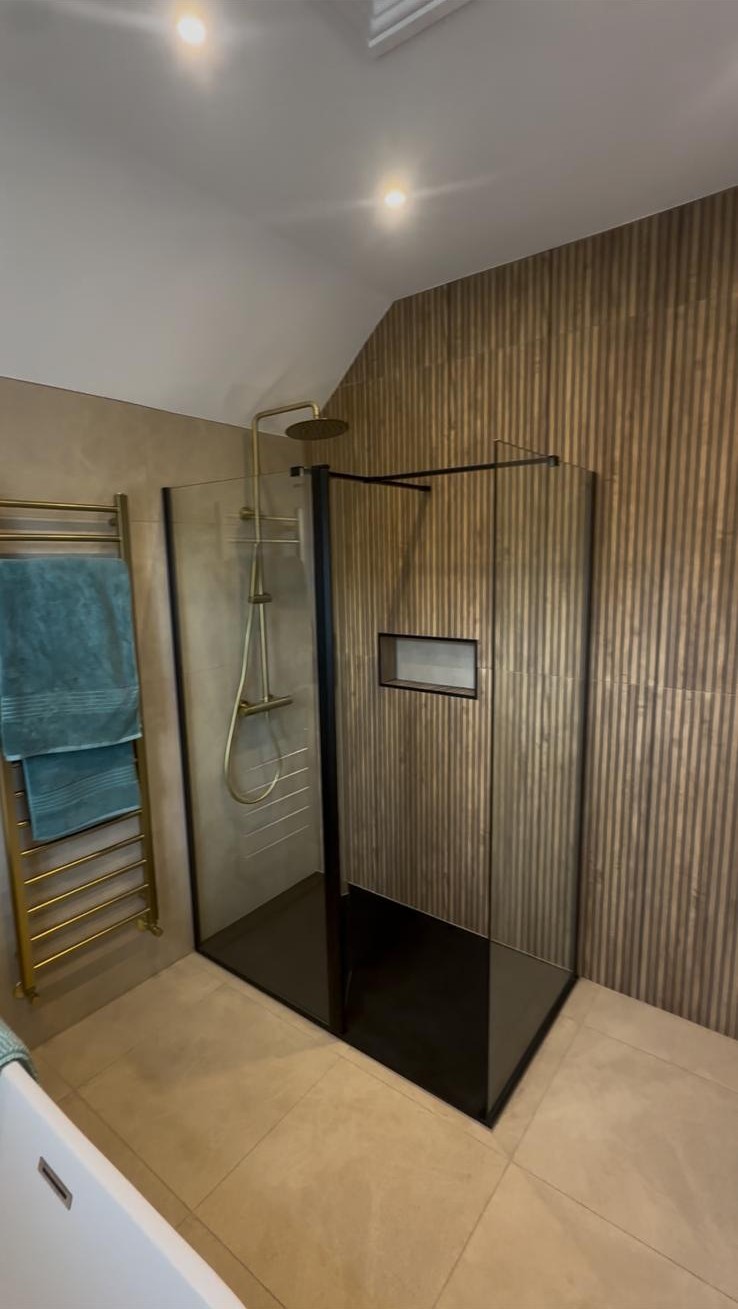
Bathroom Installation
Full bathroom fits handled by the same small team.
Bathroom Installation in Manchester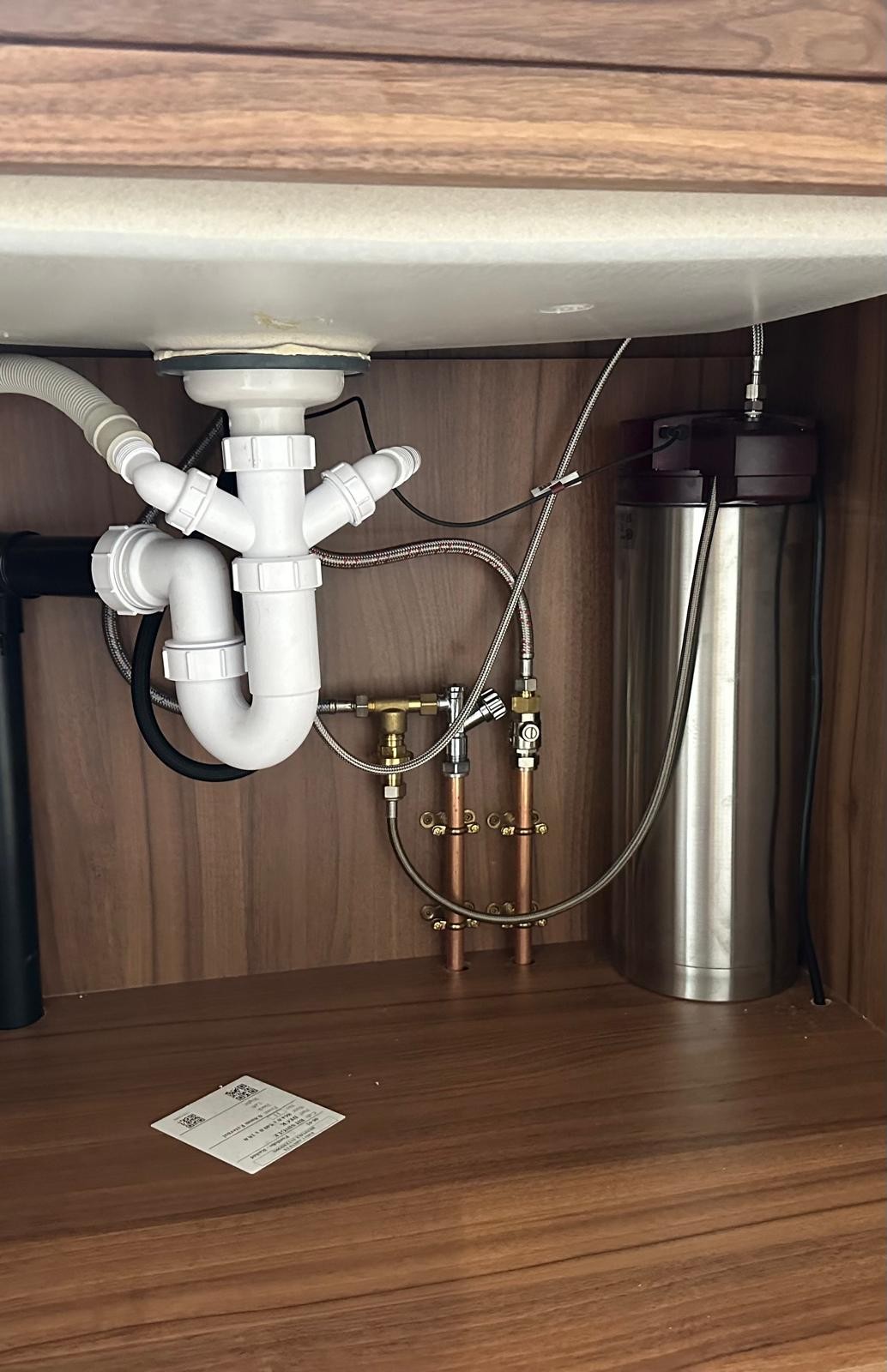
General Plumbing
Everyday plumbing work done tidily and on time.
General Plumbing in Manchester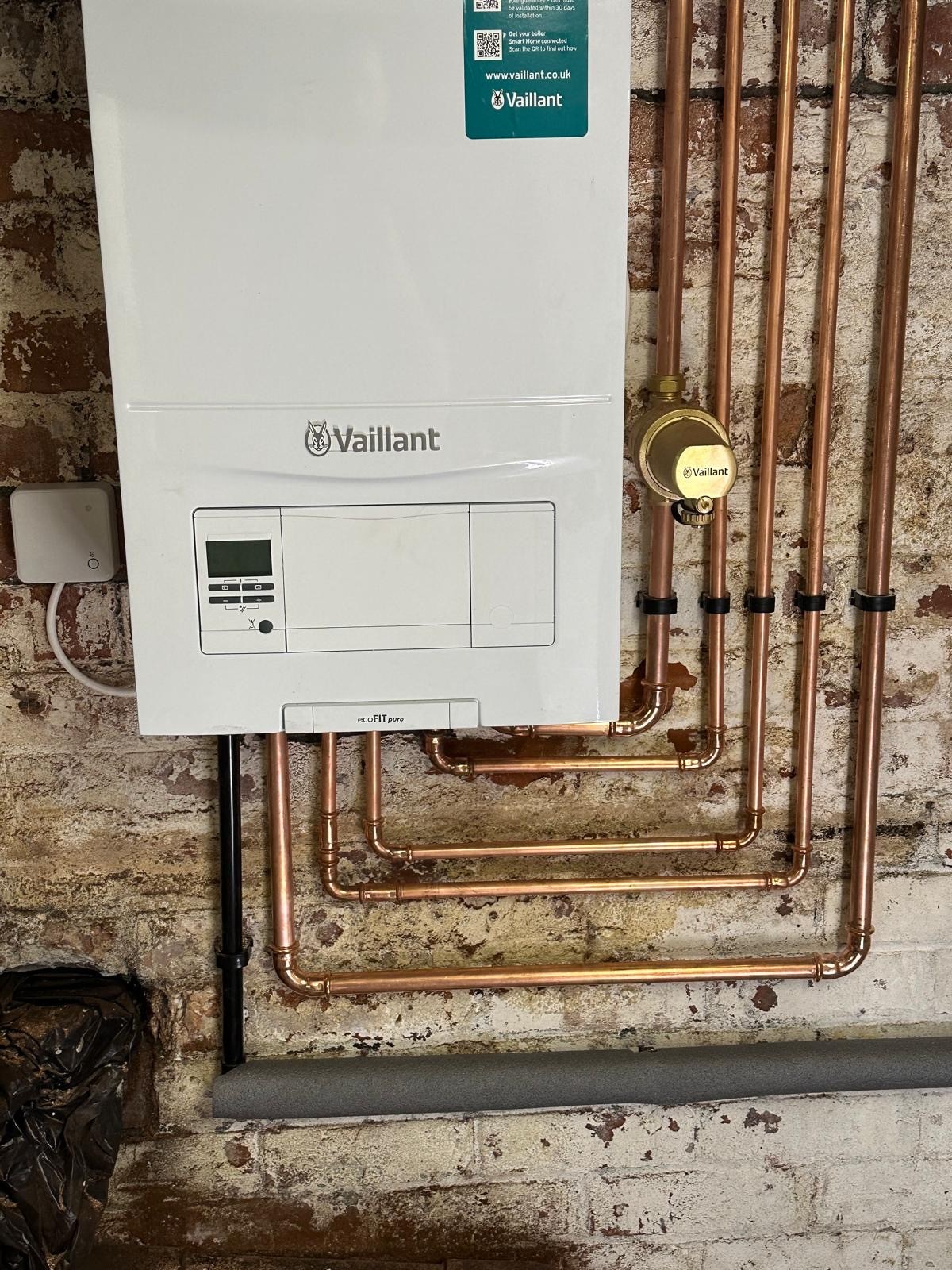
Get hot water thatkeeps up with the house
Tell us how many bathrooms and how many people. We will measure your mains, size the cylinder properly and send a free written quote within 24 hours.
- Checkatrade verified member
- £2m insured
- 12-month workmanship guarantee